How RC Boats Move in Water?
If you’ve ever seen a tiny remote control boat zooming across a pond or pool, you’ve probably wondered how something so small actually moves through the water. The answer involves a mix of simple physics, clever engineering, and some pretty cool mechanics. Let’s dive deep into the world of remote control boats and break down exactly what makes them go.
The Basic Idea Behind RC Boat Movement
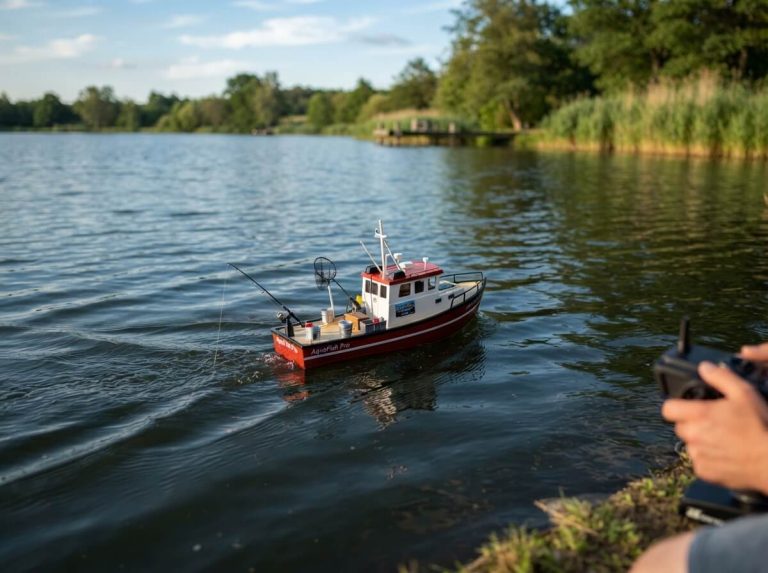
An RC boat, also called a radio-controlled boat or miniature boat, moves through water using the same basic principles as real ships and speedboats. The main difference is that someone controls it from a distance using a handheld transmitter instead of someone sitting inside steering it directly.
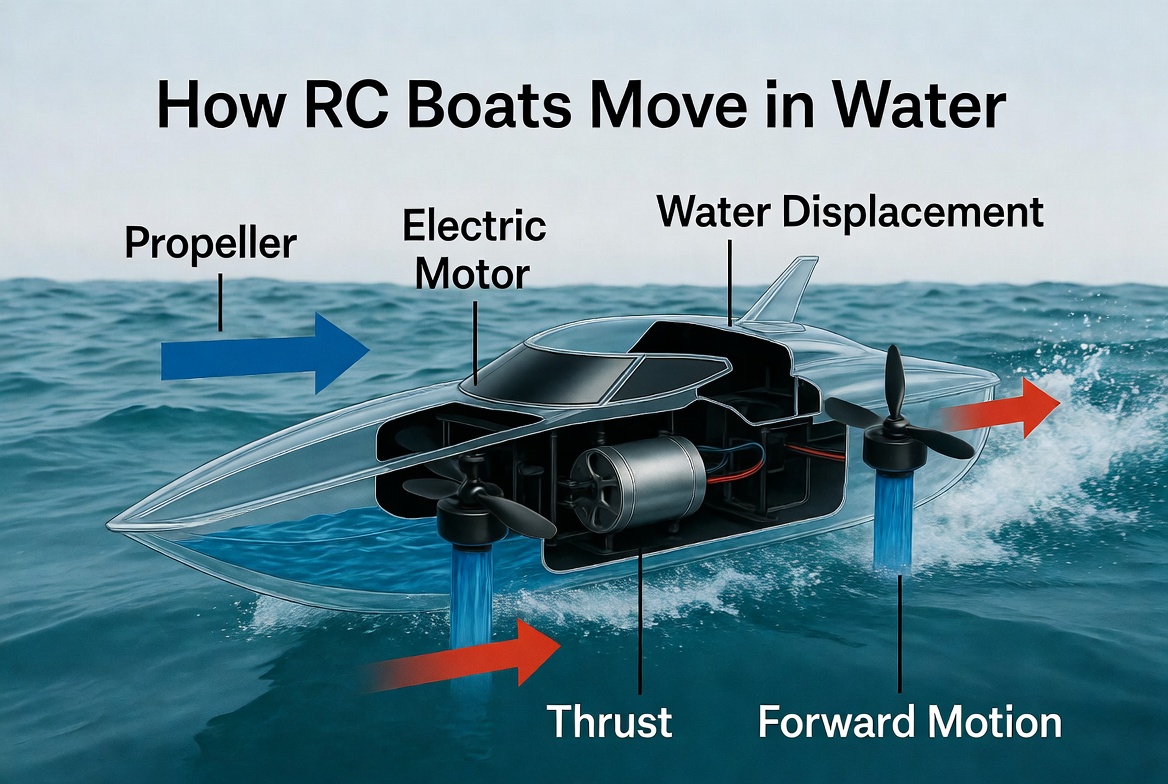
At its core, an RC boat works because of three main things: a motor that creates power, a propeller that pushes water, and a steering system that changes direction. When you press the throttle on your remote control, you send a signal to the boat. This signal tells the motor to spin faster or slower, and it tells the rudder to move left or right. All of this happens in a fraction of a second, which is why the boat responds so quickly to your commands.
The water itself plays a huge role in how the boat moves. Water is much thicker than air, so it pushes back against anything trying to move through it. This pushing back is called water resistance or drag. The boat’s design, size, and speed all affect how much drag the water creates. Understanding drag helps explain why some toy boats zoom along while others move more slowly.
Understanding the Motor: The Heart of Your RC Boat
The motor is basically the engine of your remote control boat. It takes electrical power from a battery and turns it into spinning motion. Most hobby boats use electric motors, which are simple, reliable, and easy to control with a remote.
There are two main types of motors you’ll find in RC boats: brushed motors and brushless motors. Brushed motors are older and more common in beginner boats. They have little carbon brushes inside that help the electricity flow correctly. These motors are tough and easy to fix if something goes wrong. Brushless motors are newer and more efficient. They run faster and longer on the same battery charge, but they cost a bit more money.
When you move the throttle stick on your remote, you’re really controlling how much electrical power flows to the motor. Push it halfway and the motor gets half power. Push it all the way and the motor gets full power. This direct control means you can make your boat speed up, slow down, or stop pretty much instantly.
The motor’s job is to spin the propeller. The faster the motor spins, the faster the propeller spins. A faster spinning propeller pushes more water backward, which shoots the boat forward. It’s the same idea as using a paddle to move a canoe, except the propeller does it automatically and very fast.
The Propeller: The Real Power Behind Movement
Now let’s talk about the actual thing that moves the boat: the propeller, also called a prop or screw. The propeller has blades that twist and spin. As these blades turn, they slice through the water and push it backward. This is called thrust, and it’s what actually moves the boat forward.
Think of a propeller like a corkscrew. When you twist a corkscrew into a cork, it pulls the cork toward you. A propeller works the same way but with water instead of cork. The spinning blades have an angle that forces water to move backward. By Newton’s third law (every action has an opposite reaction), when the propeller pushes water backward, the water pushes the boat forward.
Different boats use different sized propellers. A small boat might have a tiny propeller, while a larger RC boat has a bigger one. The size of the propeller affects speed and power. A bigger propeller can move more water with each spin, giving the boat more push. A smaller propeller spins faster but moves less water.
The material of the propeller also matters. Most boat props are made of nylon plastic, aluminum, or stainless steel. Plastic props are cheap and break easily, which is actually good because they protect the motor if you hit something. Metal props are stronger and last longer, but they cost more and might damage the motor if you crash.
Buoyancy: How Boats Stay Afloat and Move
Before a boat can move anywhere, it has to float. Buoyancy is the force that keeps things from sinking. An RC boat floats because the boat’s hull (the bottom part) pushes water out of the way, and the water pushes back with equal force. This pushing back keeps the boat up.
The shape of the hull is really important for how the boat moves. Most RC boats have hulls designed to cut through water easily and reduce drag. Some boats have flat bottoms, which are stable but slower. Others have V-shaped hulls, which are faster and better for rough water. The hull’s shape also affects how the boat handles turns and tricks.
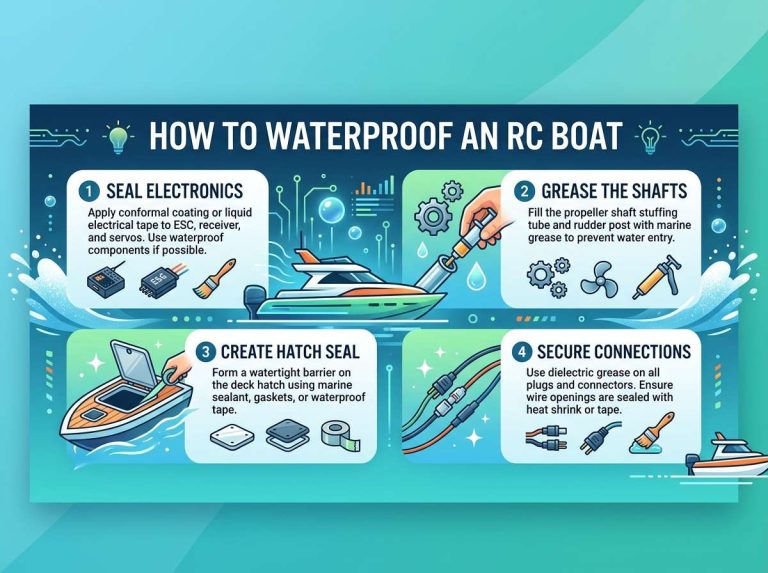
A boat stays on top of the water because it weighs less than the amount of water it displaces. If your RC boat started taking in water, it would get heavier. Eventually, it would weigh more than the water it displaces and would sink. This is why keeping your boat watertight is so important. Most boats have a rubber seal around the motor shaft and sealed compartments for the battery and electronics.
How the Rudder Steers the Boat
You’ve learned how the boat moves forward, but how does it turn? That’s where the rudder comes in. The rudder is a flat piece that sits in the water behind the propeller. When you move the joystick on your remote control left or right, the rudder tilts to one side or the other.
Here’s how it works: when the rudder tilts left, it pushes the back of the boat to the right. This makes the boat turn left. It seems backwards, but that’s how boat steering works. The water pushes against the tilted rudder, forcing the rear of the boat to swing around. The front of the boat follows the rear, and the whole boat rotates.
The faster the boat is moving, the more effective the rudder becomes. A boat moving at full speed turns quickly and sharply. A boat moving slowly barely turns at all because the water doesn’t push hard enough on the rudder. This is why you can’t steer a boat that’s stopped. You need water flowing past the rudder for it to work.
Some RC boats have multiple rudders or special steering designs to make them turn even sharper. Racing boats often use these advanced steering setups. Beginners usually have simple single-rudder systems that work perfectly fine for learning.
Forward and Reverse: More Than Just Speed
On your remote control, you probably have a throttle that makes the boat go forward and backward. Moving it forward makes the boat go faster in the forward direction. Moving it backward makes the boat go in reverse.
Here’s something interesting: most RC boat motors can spin both directions. When you want reverse, the motor actually spins the opposite way, which spins the propeller backward. A backward-spinning propeller pushes water forward instead of backward, pulling the boat in reverse. It’s simple but really clever.
The speed of the boat depends on how fast the motor spins. More throttle means a faster spinning motor and propeller. A faster propeller creates more thrust, pushing the boat harder and making it go faster. The boat keeps speeding up until the thrust from the propeller equals the drag from the water. After that point, more throttle won’t make it faster—it just stays at top speed.
Different boats have different top speeds. A slow recreational boat might max out at 10 miles per hour. A racing boat could hit 30, 40, or even 50 miles per hour. The boat’s design, motor power, battery power, and propeller size all affect top speed.
Water Resistance and Drag: The Invisible Force Slowing You Down
Every time an RC boat moves through water, the water fights back. This resistance is called drag, and it acts like an invisible brake. Understanding drag helps explain why boats slow down when you let off the throttle and why boat design matters so much.
Several things cause drag. First, there’s surface drag: the friction between the boat’s hull and the water. A smoother hull creates less friction, so racing boats often have special coatings to make their hulls super slippery. Second, there’s pressure drag: the water in front of the boat has to get pushed out of the way, and this takes energy. A narrower, pointer boat shape reduces pressure drag.
Drag gets worse as the boat goes faster. In fact, drag increases with the square of the speed. This means if you double your boat’s speed, the drag becomes four times stronger. This is why fast boats need powerful motors while slow boats can use smaller, cheaper motors.
The water temperature also affects drag a bit. Warm water is less thick than cold water, so a boat moves slightly faster in warm water. This is why RC boat racing rules often mention water temperature—different conditions affect performance.
Different Types of RC Boats Move in Different Ways
Not all RC boats move the same way. Let’s look at a few common types and how their movement works.
Speedboats and Racing Boats are built to go fast. They have slim hulls, powerful motors, and big propellers. They sit low in the water and cut through it like knives. Racing boats are designed to minimize drag and maximize speed. Pilots operate them hard and fast, and they respond instantly to steering commands.
Sailboats use wind power instead of motors, so they move totally differently. The wind fills their sails and pushes them forward. A person still uses a remote control to adjust the sails and rudder, but they’re working with nature instead of against it. Sailboats are slower but incredibly fun because they require more skill to operate.
Tugboats and Cargo Boats are heavy and move slowly. They’re built to be tough and stable, not fast. These boats have larger hulls and smaller propellers. They’re great for learning because they respond more gently and are harder to crash.
Jet-powered RC Boats use water jets instead of propellers. A jet boat sucks in water from the bottom and shoots it out the back at high speed. This creates thrust just like a propeller does, but jet boats handle differently in shallow water and tight spaces.
Submarines are special RC boats that can go underwater. They have ballast tanks that fill with water to make them sink and empty to make them rise. Moving through water underwater works the same as on the surface, but submarines have extra challenges because they need to manage depth and stay watertight.
How Your Remote Control Sends Commands to the Boat
Your handheld transmitter sends invisible radio signals to a receiver inside the boat. This receiver gets the signal and tells the motor how fast to spin and tells the rudder how much to turn. It all happens instantly, which is why your boat responds right away when you move the controls.
The receiver needs electrical power to work, which comes from the onboard battery. If your battery runs low, the signals get weaker and the boat might not respond or might move slowly. This is why checking your battery before heading out is so important.
Most modern RC boats use digital signals, which are more reliable than old-style analog signals. Digital signals can be sent faster and more accurately, giving you better control over your boat.
Tips for Better Control of Your RC Boat
Now that you understand how RC boats move, here are some practical tips for controlling yours better.
Start by practicing in calm water like a pool or pond with no current. Moving water makes boats much harder to control. Once you feel comfortable, try different water conditions.
Go slowly when you’re learning. Let your boat move at half throttle while you practice steering. This gives you time to react if something goes wrong and helps you understand how your boat handles.
Remember that boats can’t turn as sharply as cars. Plan your turns ahead of time and use gentle steering inputs. Jerky, sudden movements make boats hard to control.
Keep your boat away from obstacles. If your boat crashes into the shore or a dock, it might get damaged. Even a gentle crash can knock something loose or crack the hull.
Always check your battery voltage before going out. A weak battery means weaker signals and slower boat response. Fully charged batteries give you the best experience.
Clean your boat when you’re done, especially the propeller and water intake areas. Salt water or dirty pond water can corrode parts and jam the propeller.
The Science and Fun All Together
When you watch an RC boat zoom across the water, you’re watching physics in action. The motor creates rotational energy. The propeller converts that spinning motion into thrust by pushing water backward. The boat’s hull keeps the whole thing floating. The rudder uses water pressure to change direction. All of this happens because of simple laws of motion and the properties of water.
What makes RC boating so cool is that you control all of this from a distance. You’re commanding the motor speed and rudder angle, and the boat obeys your commands instantly. Even though it’s small and remote, your boat follows the same physical rules as a full-size ship.
The best part is that you don’t need to understand all the physics to have fun. Just point your boat where you want it to go, adjust the throttle, and enjoy watching it move. The more you operate RC boats, the better you’ll understand how they behave, and your skills will improve naturally.
Final Thoughts
RC boats move through water using a simple system: a motor spins a propeller, which pushes water backward and creates forward motion. A rudder changes the direction the boat faces. The boat’s design affects how easily it slides through water and how well it responds to steering. Different boats have different designs, so they move and handle differently.
Whether you’re racing a speedboat, sailing a miniature sailboat, or just cruising a fun boat around your local pond, you now understand the basics of how RC boats actually move. You know about thrust, drag, buoyancy, and steering. You understand why the propeller is so important and how the motor powers everything.
The next time you operate an RC boat, pay attention to how it responds. Notice how turning works better at higher speeds. Feel how the boat accelerates when you increase throttle. Watch how drag slows it down when you let off the power. All of these things make sense now because you understand the science behind the movement.
RC boats are a fantastic hobby because they combine engineering, physics, and pure fun. Start with a beginner boat, practice in calm water, and enjoy learning how these amazing little machines work. Soon you’ll be zipping around like an expert, and you’ll do it with a clear understanding of exactly what’s happening underneath the water’s surface.