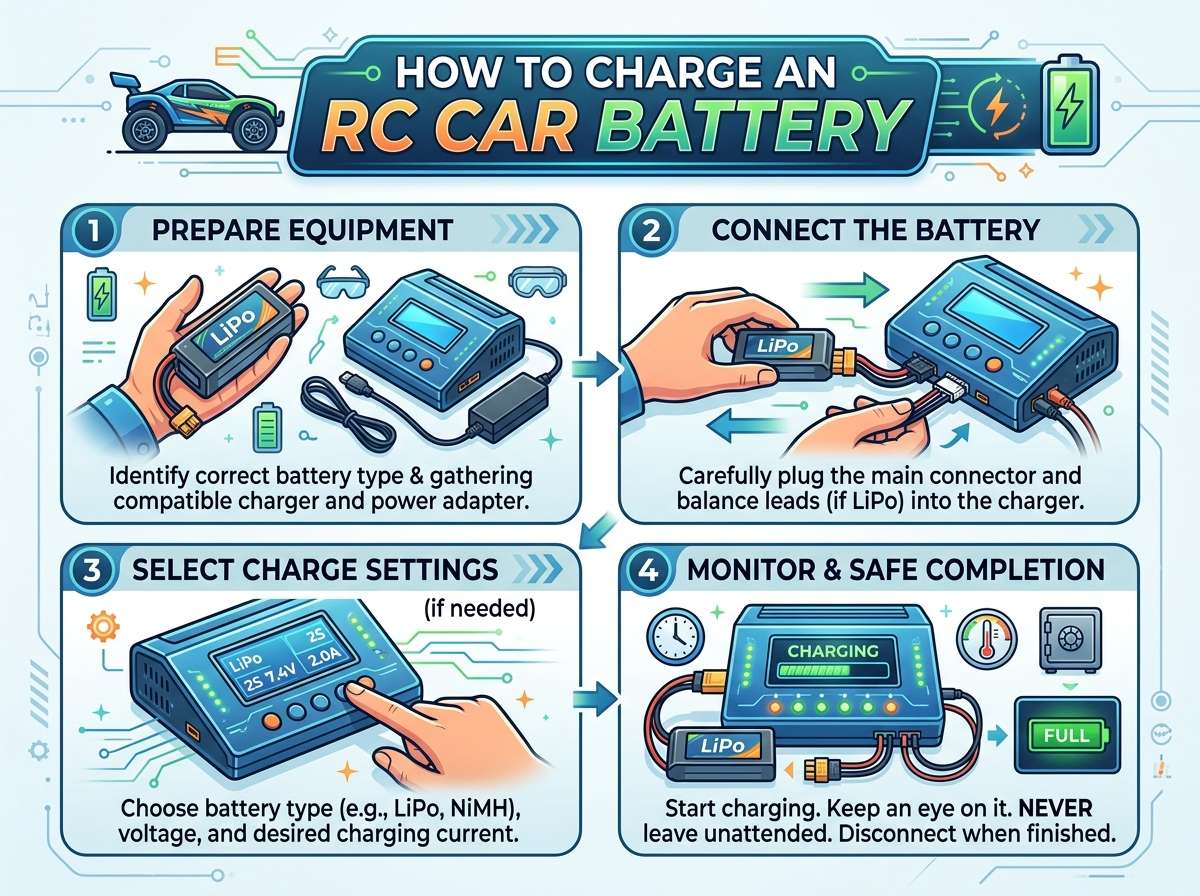
How to Charge an RC Car Battery?
So you just got your hands on a brand new RC car, and you’re super excited to take it for a spin. But wait—the battery is dead. No worries! Charging an RC car battery isn’t rocket science, and I’m here to walk you through every single step. By the end of this guide, you’ll feel like a pro at keeping your remote control vehicle powered up and ready to race.
Why Proper RC Battery Charging Matters
Before we dive into the how, let’s talk about the why. Your RC car’s battery is basically the heart of the whole operation. Treat it right, and it’ll last you forever. Treat it badly, and you’ll be buying replacements constantly. Plus, bad charging habits can actually damage your battery faster than you’d think, which means less playtime and more money out of your pocket.
A charged RC car battery gives you the speed and power you want. A poorly charged battery? That gives you sluggish performance, shorter run times, and a bunch of headaches. That’s exactly why learning the right way to charge your RC car battery is so important right from the start.
Different Types of RC Car Batteries Explained
Not all RC car batteries are created equal. Let’s break down the main types you’ll encounter.
Lithium Polymer Batteries (LiPo)
LiPo batteries are super popular right now, and for good reason. They’re lightweight, pack a lot of power into a small space, and deliver amazing performance. If your RC car is modern, there’s a solid chance it uses a LiPo battery pack. These batteries have multiple cells, which is why you’ll see things like “3S” or “4S” labels on them. That number tells you how many cells are stacked together.
LiPo batteries need a special charger because they’re a bit picky about how they get charged. Overcharge them, and they can actually catch fire. Undercharge them, and they’ll puff up and become useless. Sounds scary, right? But honestly, once you know the rules, it’s totally manageable.
Nickel Metal Hydride Batteries (NiMH)
These batteries have been around for ages. They’re tougher to damage than LiPo batteries, which makes them great for beginners who are still learning the ropes. They don’t require as much special care during charging, and they’re pretty forgiving if you make a small mistake.
NiMH batteries do have downsides, though. They’re heavier, give you less runtime, and don’t deliver quite as much power as LiPo batteries. But if you’re just starting out, they’re a solid choice for learning without stress.
Nickel Cadmium Batteries (NiCd)
Honestly, you probably won’t run into many of these anymore. They’re older technology, and most RC cars have moved on to better options. But just so you know, they exist and they work kind of like NiMH batteries, but they have memory issues if you don’t fully discharge them before charging.
Getting Your Hands on the Right Charger
This is huge. You can’t just use any charger for your RC car battery. Using the wrong charger is how people end up with dead batteries, damaged equipment, or worse. So let’s talk about finding the right one.
Know Your Battery Type First
Check your RC car’s manual or the battery itself. You need to know if you’re dealing with a LiPo, NiMH, or something else entirely. Once you know what you’ve got, you can pick a charger that’s designed for it.
Dedicated Chargers vs. Multi-Chemistry Chargers
A dedicated charger works with just one type of battery. These chargers are simple, reliable, and usually pretty affordable. If you only have one type of battery, this is a great option.
A multi-chemistry charger can handle several different battery types. This gives you flexibility, especially if you end up with multiple RC cars that use different batteries. It costs a bit more upfront, but it saves you money if you’re going to own several RC vehicles.
AC vs. DC Chargers
AC chargers plug into the wall outlet, which makes them perfect for home use. DC chargers run off a power supply or car battery, so they’re great if you want to charge on the go. Most beginners start with an AC charger because they’re cheaper and more straightforward.
Step-by-Step Guide to Charging Your RC Car Battery
Alright, let’s get into the actual process. I’m going to walk you through this like you’ve never done it before, and I’ll make sure it’s crystal clear.
Step One: Gather Your Equipment
You’ll need several things before you start. First, grab your RC car battery. Then get your charger, a safe charging location, and a timer or watch to keep track of time. Some people also like to have a fire-safe bag or container nearby, just as a safety precaution. This is especially true for LiPo batteries, which can have issues if something goes wrong.
Step Two: Read Your Battery Specifications
Look at your battery and find the label. It should tell you the capacity (measured in milliamp-hours, or mAh), the voltage, and how many cells it has. This information is critical because it tells your charger how fast it should charge your battery and when to stop.
For example, a battery might say “3S 5000mAh LiPo.” That tells you it’s a 3-cell LiPo battery with 5000 milliamp-hours of capacity. Your charger needs to know this stuff to do its job right.
Step Three: Set Your Charger for the Correct Battery Type
This step is different depending on your charger, but most will have a button or menu where you can pick your battery type. Select LiPo, NiMH, NiCd, or whatever your battery is. If you pick the wrong one, the charger won’t work properly, and you could damage your battery.
Step Four: Input the Battery Capacity
Tell your charger how many mAh your battery is. Again, this is on the label. If your battery says 5000mAh, put in 5000. This helps the charger figure out how fast to charge and when the battery is full.
Step Five: Pick Your Charging Rate
This is something that confuses a lot of beginners, but it’s actually simple. The charging rate is measured in amps. A common charging rate for RC car batteries is 1C, which means charging at a rate equal to the battery’s capacity. So a 5000mAh battery charged at 1C would charge at 5 amps.
For beginners, I always recommend charging at 1C or even lower, like 0.5C. This takes longer, but it’s much safer and keeps your battery healthier in the long run. Fast charging is cool, but it stresses your battery and shortens its lifespan.
Step Six: Plug in Your Battery
Connect your RC car battery to the charger using the correct connectors. Most modern RC batteries use XT60 or similar connectors, but yours might be different. Match them up carefully. Forcing the wrong connector can damage both your battery and your charger.
Once the battery is plugged in, your charger should recognize it and display information on the screen. If it doesn’t show anything, double-check your connections and make sure everything is lined up right.
Step Seven: Start the Charging Process
Most chargers have a big button or menu option to start charging. Hit it, and the charging process begins. Your charger should display the current voltage, the charging speed, and an estimate of how long charging will take.
Step Eight: Monitor the Process
Don’t just walk away and ignore it. Stick around and keep an eye on things, at least for the first few minutes. Your charger should show a steady light or indicator while charging is happening. If you see any weird warnings or errors, stop the process right away and figure out what’s wrong.
Step Nine: Wait Until Charging is Complete
Your charger will beep, flash, or display a message when your battery is fully charged. This is when you stop. Overcharging is bad news, especially for LiPo batteries, so always wait for that “fully charged” signal before unplugging anything.
Step Ten: Disconnect the Battery
Once charging is done, carefully unplug your battery from the charger. Handle it gently and let it sit for a few minutes at room temperature before using it.
Important Safety Tips for Battery Charging
Safety should always be your top priority when dealing with RC car batteries. These aren’t toys to mess around with.
Keep an Eye on Temperature
Your battery should never get too hot while charging. If you touch the battery and it’s hot, unplug it immediately. A battery that feels warm to the touch is fine, but hot is not okay. Heat means something is wrong, and you need to stop and investigate.
Charge in a Safe Location
Don’t charge your battery on top of your bed, near curtains, or close to anything flammable. Use a table or workbench in a dry area. Some people like to charge in a fire-proof container or bag, which is honestly a smart move, especially for LiPo batteries.
Never Leave Charging Batteries Unattended
Seriously, don’t leave your battery charging while you go to the store or take a nap. Stay nearby while it’s charging. Most of the time, everything is fine, but you want to be there if something goes wrong.
Check for Physical Damage
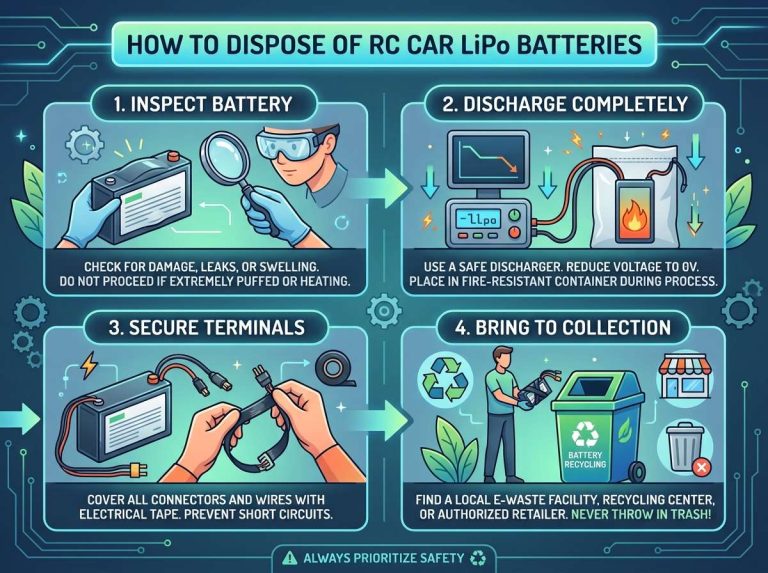
Before charging, look at your battery closely. If it’s swollen, damaged, or leaking, don’t charge it. A damaged battery is a dangerous battery. Dispose of it properly, and get a new one.
Don’t Overcharge
Once your charger says it’s done, it’s done. Overcharging doesn’t make your battery work better. It actually hurts the battery and can cause problems down the road. Trust your charger and unplug when it tells you to.
Use the Right Cables and Connectors
Wrong cables or loose connections are how accidents happen. Make sure every connector is tight and properly matched. If something doesn’t fit, don’t force it.
Common Charging Mistakes Beginners Make
Learning what not to do is just as important as learning what to do.
Mistake One: Using the Wrong Charger
Trying to charge a LiPo battery with an old NiMH charger is asking for trouble. Each battery type needs its own kind of charger. Don’t take shortcuts here.
Mistake Two: Charging Too Fast
Fast charging gives you quick results, but it wears out your battery. Slow and steady charging is the way to go if you want your battery to last.
Mistake Three: Forgetting to Balance Charge LiPo Batteries
LiPo batteries have multiple cells, and sometimes those cells don’t charge evenly. A balance charger makes sure all the cells charge equally. Most modern chargers have this feature, so use it. It takes a little longer, but it keeps your battery healthy.
Mistake Four: Ignoring Warning Signs
If your charger beeps, shows an error, or the battery gets too hot, that’s your signal to stop. Don’t ignore these warnings. Pay attention and figure out what’s going on.
Mistake Five: Storing Batteries at Full Charge
If you’re not using your RC car for a while, don’t leave the battery fully charged. A battery stored at full charge degrades faster. Charge it up just before you use it, not days in advance.
How Long Should Charging Take?
This depends on several things: the battery size, the charging rate, and the charger itself. A small NiMH battery might charge in 30 minutes. A big LiPo battery charged slowly could take several hours.
As a general rule, if you’re charging at 1C, charging time is roughly one hour per 1000mAh. So a 5000mAh battery would take about five hours at 1C. This is just an estimate, and your actual time might be different. Always let your charger tell you when it’s done.
Taking Care of Your RC Battery Between Charges
Charging is just one part of battery care. Here’s how to keep your battery in great condition all the time.
Store Batteries Properly
Keep your batteries in a cool, dry place. Extreme heat or cold damages batteries. Room temperature is perfect. Some people use a dedicated battery storage box or bag, which is a good idea if you have multiple batteries.
Check Battery Voltage Before Storage
Before putting a battery away for a while, check its voltage. For a LiPo battery, each cell should be around 3.8 volts when stored. If it’s higher or lower, give it a quick charge or discharge to get it to the right level.
Don’t Leave Batteries in Your RC Car
When you’re done playing, take the battery out of your RC car. Leaving it in can drain the battery slowly, and it can also cause problems if the RC car has any issues.
Use Your Battery Regularly
Batteries that sit unused for long periods can develop problems. Try to use your batteries at least once every few weeks. This keeps them healthy and ready to go.
Keep Batteries Away from Water
Water and batteries don’t mix. If your battery gets wet, let it dry completely before attempting to charge it. Better yet, just avoid water entirely.
Troubleshooting Charging Problems
Sometimes things don’t go as planned. Here are some common problems and how to fix them.
Problem: Charger Won’t Recognize the Battery
First, check your connections. Make sure the battery is plugged in all the way and the cable isn’t damaged. Try unplugging and plugging it back in. If that doesn’t work, try a different charging cable if you have one. If the charger still doesn’t recognize it, the battery might be dead or damaged.
Problem: Charging Takes Forever
If charging is taking way longer than normal, you might be charging at a very slow rate. Check your charger settings and make sure the charging current is set correctly. Also, make sure you’ve put in the right battery capacity. If the charger is set to charge a 5000mAh battery but you only have 1000mAh, it’s going to take forever.
Problem: Battery Gets Hot While Charging
Heat is a red flag. Unplug the battery immediately and let it cool down. Don’t use that battery until you figure out what’s wrong. Check your connections and charger settings. If the battery stays hot no matter what you do, it’s probably damaged and needs to be replaced.
Problem: Battery Puffs Up
Puffing is a sign of damage or overcharging. If your LiPo battery puffs up, stop using it right away. It’s no longer safe. Dispose of it properly and get a new battery.
Problem: Charger Gives an Error Message
Read the error code carefully. Your charger manual should explain what it means. Common errors include wrong battery type, bad connection, or a damaged battery. Usually, unplugging and checking everything fixes the problem.
Different Charging Methods Explained
Most people use a standard wall charger, but there are other options.
Wall Chargers
This is the most common method. You plug it into the wall, plug your battery in, and you’re done. Simple, reliable, and affordable.
Balance Chargers
These are specialized chargers designed specifically for multi-cell batteries like LiPo packs. They charge each cell individually to make sure they’re all balanced. If your battery has multiple cells, a balance charger is worth the investment.
DC Chargers
These plug into a DC power supply or your car’s power outlet. Great for charging on the go, but you need an extra power source.
Solar Chargers
Some people use solar chargers to juice up their RC batteries while they’re outdoors. These are cool but slow. They work best in direct sunlight.
FAQs About RC Car Battery Charging
Can I use any charger for my RC car battery?
No. Different battery types need different chargers. Using the wrong charger can damage your battery or create safety issues.
How often should I charge my RC car battery?
Charge it whenever it runs out of power. Don’t wait until it’s completely dead. Try to charge it when it still has a little bit of power left in it.
Is it okay to charge my battery overnight?
Not really. While some chargers have automatic shutoff, it’s better to monitor the charging and unplug it as soon as it’s done. Overnight charging risks overcharging.
What’s the best charging temperature?
Room temperature, around 68 to 72 degrees Fahrenheit, is ideal. Never charge a battery that’s too hot or too cold.
How long does an RC car battery last?
This depends on the battery type and how well you take care of it. A well-maintained LiPo battery might last 300 to 400 charge cycles. NiMH batteries typically last longer but have less power.
Can I charge two batteries at the same time?
Some chargers have dual channels, which means yes. But if your charger only has one channel, you’ll need to charge batteries one at a time.
What should I do with an old RC battery?
Don’t throw it in the trash. RC batteries should be recycled properly. Most electronics shops and battery retailers have recycling programs for old batteries.
Wrapping Up Your Charging Journey
Learning how to charge your RC car battery is one of the first and most important skills you need as an RC car owner. It’s not complicated, but it does matter. Follow the steps in this guide, stay safe, and treat your battery with respect. Do that, and your battery will perform great and last for years.
The most important things to remember are these: know your battery type, use the right charger, charge at a reasonable speed, keep an eye on things while charging, and always unplug when it’s done. That’s really all there is to it.
Now get out there and charge up that battery. Your RC car is ready to race, and you’re ready to make it happen. Happy charging!

Peterson is an RC hobby enthusiast and product reviewer with a passion for remote-controlled cars, trucks, boats, drones, and accessories. He enjoys testing the latest RC products, comparing features, and sharing practical buying guides to help beginners and experienced hobbyists make informed decisions. Through RCThing.com, Peterson provides honest reviews, maintenance tips, and expert advice to help readers get the most from their RC adventures.