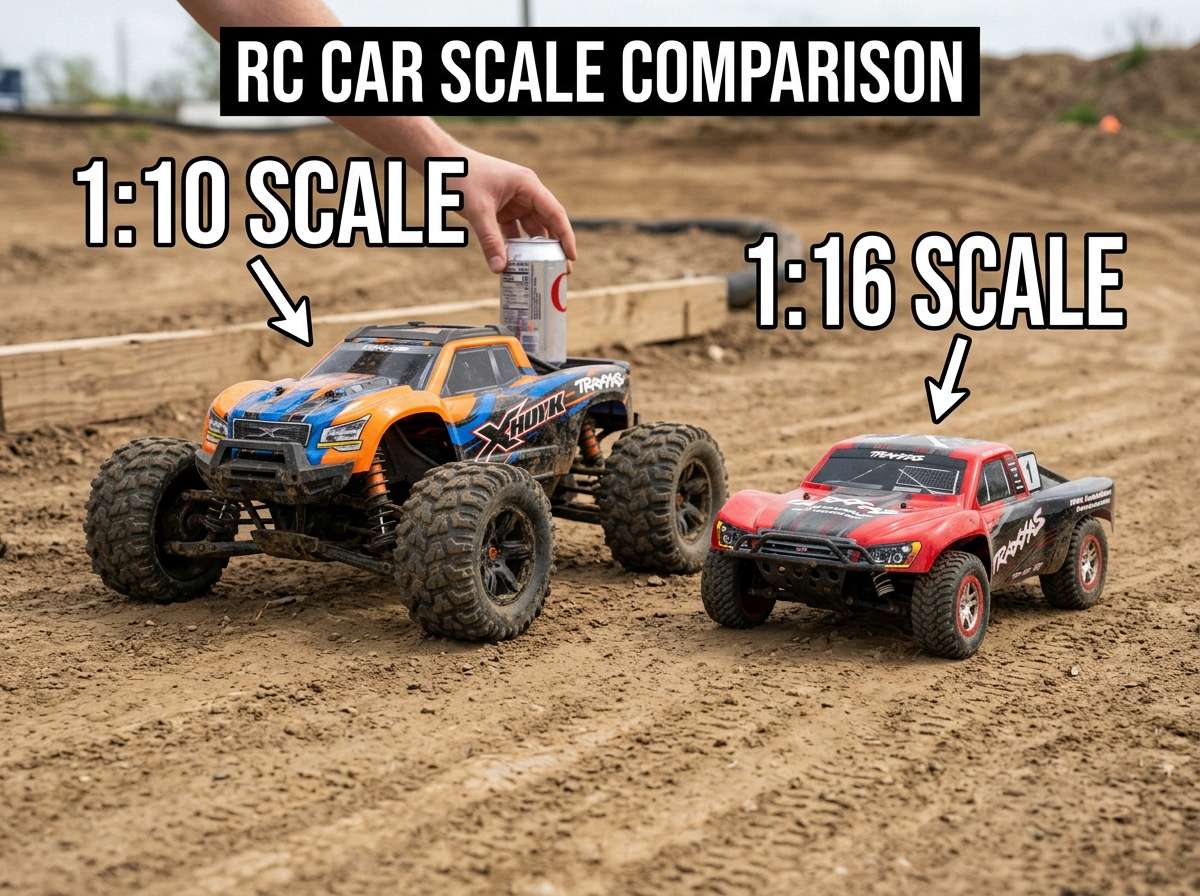
1/10 vs 1/16 Scale RC Cars
If you’re looking to jump into the world of remote control cars, you’ve probably noticed that size matters a lot. The two most popular options are 1/10 and 1/16 scale models. These numbers might look confusing at first, but they’re actually pretty simple once you understand them. Let’s break down everything you need to know about these two sizes so you can pick the right one for your needs.
What Do 1/10 and 1/16 Actually Mean?
The scale number tells you how much smaller the RC car is compared to a real car. A 1/10 scale car means the model is one-tenth the size of an actual car. So if a real car is 15 feet long, a 1/10 scale version would be about 18 inches long.
A 1/16 scale car is even smaller. It’s one-sixteenth the size of a real car. Using the same math, that same 15-foot car would be around 11 inches long in 1/16 scale. The difference might not sound huge, but when you’re actually holding these cars in your hands, the size gap becomes very clear.
Think of it like this: a 1/10 scale remote control car is roughly the size of a small loaf of bread. A 1/16 scale car is closer to the size of a smartphone. That extra size in the 1/10 model makes a real difference in how the car feels and performs.
Size Comparison Breakdown
Let’s talk about the actual dimensions because this affects everything from storage to playability.
A typical 1/10 scale RC car measures around 18 to 20 inches long, 8 to 10 inches wide, and 6 to 8 inches tall. These dimensions make the car substantial enough that you can really feel it in your hands. Kids and adults alike enjoy the heft and presence of a 1/10 scale model.
A 1/16 scale RC car is much more compact. Most models in this size range are about 10 to 12 inches long, 5 to 7 inches wide, and 4 to 6 inches tall. This smaller footprint makes a big difference when you’re thinking about where you’ll drive your car. You can easily fit a 1/16 scale car in a backpack or small bag, making it perfect for travel.
The weight difference is also notable. A 1/10 scale car typically weighs between 1.5 to 2.5 pounds. A 1/16 scale model usually weighs between 0.5 to 1 pound. This weight difference affects how the car handles and how much power it needs from the battery.
Performance: How These Cars Drive
The way a car drives is one of the biggest differences between these two scales. Both can be fast, but they experience speed differently.
1/10 scale cars are known for their stability and power. The larger frame and bigger wheels mean the car sits higher off the ground. This helps it handle rough terrain better. When you’re driving a 1/10 scale model on grass, gravel, or bumpy surfaces, it feels more planted and secure. The bigger size also means more space for larger components, so you get better durability and easier repairs.
Speed feels different on a 1/10 scale car. Because of the larger size, a 1/10 model feels slower even when it’s going at the same miles per hour as a 1/16 car. The scale makes the speed feel less intense, which some people prefer because it’s easier to control and less chaotic.
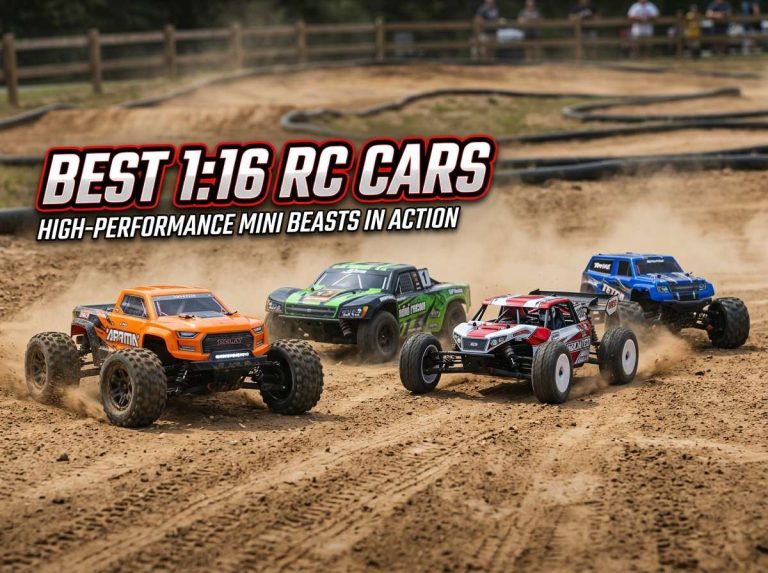
1/16 scale cars are tiny powerhouses. Even though they’re smaller, they can be just as fast as their bigger cousins. That’s where things get exciting. A 1/16 scale car zooming along at 20 miles per hour looks incredibly fast because of how small it is. The speed feels way more dramatic compared to the car’s size.
However, the smaller size makes 1/16 scale cars more sensitive to small bumps and uneven ground. Pebbles that a 1/10 car rolls over without thinking become obstacles for a 1/16 model. This means you need smoother driving surfaces for the best experience with a 1/16 scale car. Indoor tracks, smooth concrete, or level grass work best for these tiny racers.
Cost Differences
Price is usually one of the first things people think about when comparing RC cars. Let’s be real about the money side of this hobby.
1/10 scale cars cost more upfront. A basic 1/10 scale RC car starts around $50 to $100. If you want a better quality model with more features, you’re looking at $150 to $300 or more. High-end 1/10 scale racing cars can cost way more.
1/16 scale cars are generally cheaper. You can find a decent 1/16 scale model for $30 to $80. Even the nicer ones rarely go above $150. This makes 1/16 scale a great entry point for people who want to test the waters without spending a lot of money.
But here’s the thing about ongoing costs. Both scales need batteries, chargers, and replacement parts. A 1/10 scale car usually needs a bigger battery because of its larger motor and weight. That bigger battery costs more money. Replacement parts also tend to be more expensive for 1/10 cars because the parts are bigger and more complex.
1/16 scale cars need smaller batteries and chargers. The parts are cheaper to replace because they’re simpler and smaller. So while the initial purchase might be less for a 1/16 scale car, the total cost of ownership can actually be similar when you factor in batteries and parts over time.
Battery Life and Runtime
How long can you actually play with each scale? That’s an important question.
1/10 scale cars have larger batteries that hold more energy. A typical 1/10 scale car might run for 15 to 30 minutes on a full charge, depending on the battery size and how hard you’re driving. The bigger battery also weighs more, but that’s part of the trade-off.
1/16 scale cars use smaller batteries that don’t hold as much energy. Most 1/16 models run for about 10 to 20 minutes on a full battery. The good news is that because these cars are lighter, they don’t drain the battery as fast when you’re driving at reasonable speeds.
Here’s a pro tip for both scales: if you buy a second battery and charger, you can keep one battery charging while you drive with the other one. This lets you keep playing longer without waiting around for a recharge.
Charging time is faster for 1/16 scale cars because the batteries are smaller. You might wait 30 minutes to an hour for a 1/16 battery to charge. 1/10 batteries can take 1 to 2 hours to charge fully. Again, having two batteries solves this problem pretty well.
Where You Can Drive Them
The size and performance of these cars make them better for different places.
1/10 scale cars are versatile. You can drive them almost anywhere. They handle grass, dirt, gravel, sand, and other rough terrain. Some 1/10 models are specifically built for off-road driving and can tackle serious obstacles. Others are designed for on-road use on smooth surfaces. This flexibility means you’re not limited to where you can play.
If you have a yard with grass and some rough spots, a 1/10 scale car is perfect. These cars can bounce over small rocks and bumps without getting damaged. They work great for outdoor play.
1/16 scale cars do best on smooth surfaces. A concrete driveway, a parking lot, or a smooth gym floor is ideal for a 1/16 scale car. Some people build special indoor tracks for their 1/16 cars. These surfaces keep the car moving smoothly without getting hung up on obstacles.
You can still drive a 1/16 scale car on grass or dirt, but you need to keep the terrain smooth and level. Any small bump becomes a huge challenge. The wheels are small, so even a tiny rock can stop the car or flip it over.
Repairs and Maintenance
Breaking things is part of RC car ownership. How easy is it to fix these cars?
1/10 scale cars are easier to repair for beginners. The parts are bigger, which means they’re easier to handle and replace. If you break a wheel or an arm, you can easily pop off the old piece and snap on a new one. The tools you need are usually simple and inexpensive. You can buy a basic RC car tool set for $10 to $20 and handle most repairs yourself.
Many people enjoy working on their 1/10 scale cars as much as driving them. The larger size makes it fun to tinker with and improve the car over time.
1/16 scale cars require a steadier hand for repairs. The parts are tiny, and working with small screws and components can be tricky if you don’t have good eyesight or steady hands. You might need smaller tools and a magnifying glass to see what you’re doing. This makes repairs more frustrating for some people, especially young children.
That said, the smaller parts mean less can go wrong. The simpler mechanics of a 1/16 car mean fewer things break in the first place.
Which Scale Is Best for Kids?
If you’re buying an RC car for a child, here’s what you should think about.
For younger kids (ages 6 to 10), a 1/16 scale car might be the better choice. The smaller size is less intimidating, and the car is easier for small hands to control. The lower price also means less stress if the car gets crashed or damaged. A 1/16 scale car is a great way to introduce kids to the hobby without a big investment.
For older kids (ages 10 and up) and teens, a 1/10 scale car is usually better. The bigger size is more satisfying to drive, and kids this age have the hand-eye coordination to handle a faster and more powerful car. The 1/10 scale also holds up better to the rougher play that comes with this age group.
Of course, every kid is different. Some 8-year-olds might handle a 1/10 scale car perfectly well. Some teenagers might prefer the technical challenge of racing a 1/16 scale car. Think about your specific child’s interests and abilities.
Durability and Longevity
How long will these cars last?
1/10 scale cars are built tough. The bigger components are more durable, and the larger structure absorbs crashes better. A quality 1/10 scale car can last for years with normal play and basic maintenance. Even when you crash, the damage is often minor and easy to fix.
The durability also means you can upgrade and customize your 1/10 scale car over time. You can replace the motor, change the suspension, add new body designs, and keep the car running for years. This makes a 1/10 scale car a good long-term investment.
1/16 scale cars are delicate compared to their bigger cousins. The small parts break more easily, and a hard crash can cause serious damage. That said, many 1/16 scale cars are designed to take a beating. They’re just more fragile during crashes.
The good news is that 1/16 scale cars don’t get driven as hard by most people. Because they’re slower and easier to handle, they often experience fewer crashes than 1/10 scale models.
Special Features and Customization
Do you want to customize and upgrade your RC car? That’s where things get interesting.
1/10 scale cars have huge aftermarket communities. You can buy tons of custom parts, body designs, upgraded motors, and suspension kits. If you want to make your car unique or faster, you have endless options. This makes 1/10 scale cars perfect for hobbyists who like to tinker and experiment.
The bigger size also means you can easily customize the car without special tools. Adding a new body shell, changing the wheels, or swapping out the motor is straightforward.
1/16 scale cars have fewer customization options compared to 1/10 models. The smaller size means fewer parts are available, and most people just drive them as they come from the factory. You can still find some upgrades, but the options are more limited.
If customization is something you care about, the 1/10 scale is the way to go. If you just want to buy a car and drive it, both scales work fine.
Noise Level
Think about where you’ll be driving. Noise matters.
1/10 scale cars can be loud. The bigger motor produces more noise, especially if you’re driving fast. Indoor play areas might not allow 1/10 scale cars because of the noise. If you live in an apartment or have neighbors nearby, this could be an issue.
1/16 scale cars are much quieter. The smaller motor is less noisy, making them better for indoor play and apartment living. You can drive a 1/16 scale car indoors without disturbing everyone around you. This is a real advantage if noise is a concern.
Community and Support
Does the hobby have a good community behind it?
1/10 scale cars have a massive community. Online forums, YouTube channels, local hobby shops, and racing clubs all focus heavily on 1/10 scale cars. If you need help, you can easily find tutorials, guides, and support from other enthusiasts. Local racing events are common for 1/10 scale cars.
This community aspect means you’ll have plenty of help when you need it. You can join clubs, race against others, and learn tons from experienced drivers.
1/16 scale cars have a smaller but still active community. You can find help and resources, but there are fewer options compared to 1/10 scale. Local racing events for 1/16 scale cars are less common, though this is changing as the scale gains popularity.
Speed Comparison
Let’s talk about how fast these cars really go.
1/10 scale cars can reach speeds of 25 to 50 miles per hour, depending on the model and motor. High-end racing cars can go even faster. The bigger wheels and more powerful motors make higher speeds possible.
1/16 scale cars can also reach impressive speeds, often 15 to 35 miles per hour. Some specialized models go even faster. What’s wild is that a 1/16 scale car moving at 25 miles per hour looks way faster than a 1/10 scale car at the same speed, just because of the size difference.
Making Your Decision
So which scale should you pick? Here are some quick guidelines.
Go with a 1/10 scale car if you want versatility, more power, a bigger community, lots of customization options, better durability, and don’t mind spending more money. These cars are better for outdoor play on rough terrain and for people who want to get serious about the hobby.
Go with a 1/16 scale car if you want something affordable, quiet, easy to control, good for smooth surfaces or indoor play, and don’t plan to customize. These cars are perfect for beginners, apartment dwellers, and people who want to travel with their RC car.
Final Thoughts
Both 1/10 and 1/16 scale RC cars are awesome in their own ways. You really can’t go wrong with either choice. The 1/10 scale is the more popular and versatile option with a bigger community. The 1/16 scale is the perfect starter car and great for people with space or noise concerns.
The best RC car is the one that fits your lifestyle, budget, and interests. If you’re just starting out, think about where you’ll drive, how much money you want to spend, and whether you want to get involved in the community and customize your car. Both sizes offer tons of fun and excitement.
Start with whichever scale appeals to you most, enjoy the experience, and you might find yourself building a collection of both eventually. That’s the real beauty of the RC car hobby. The fun never stops, and there’s always room for one more car in the garage.
Peterson is an RC hobby enthusiast and product reviewer with a passion for remote-controlled cars, trucks, boats, drones, and accessories. He enjoys testing the latest RC products, comparing features, and sharing practical buying guides to help beginners and experienced hobbyists make informed decisions. Through RCThing.com, Peterson provides honest reviews, maintenance tips, and expert advice to help readers get the most from their RC adventures.