
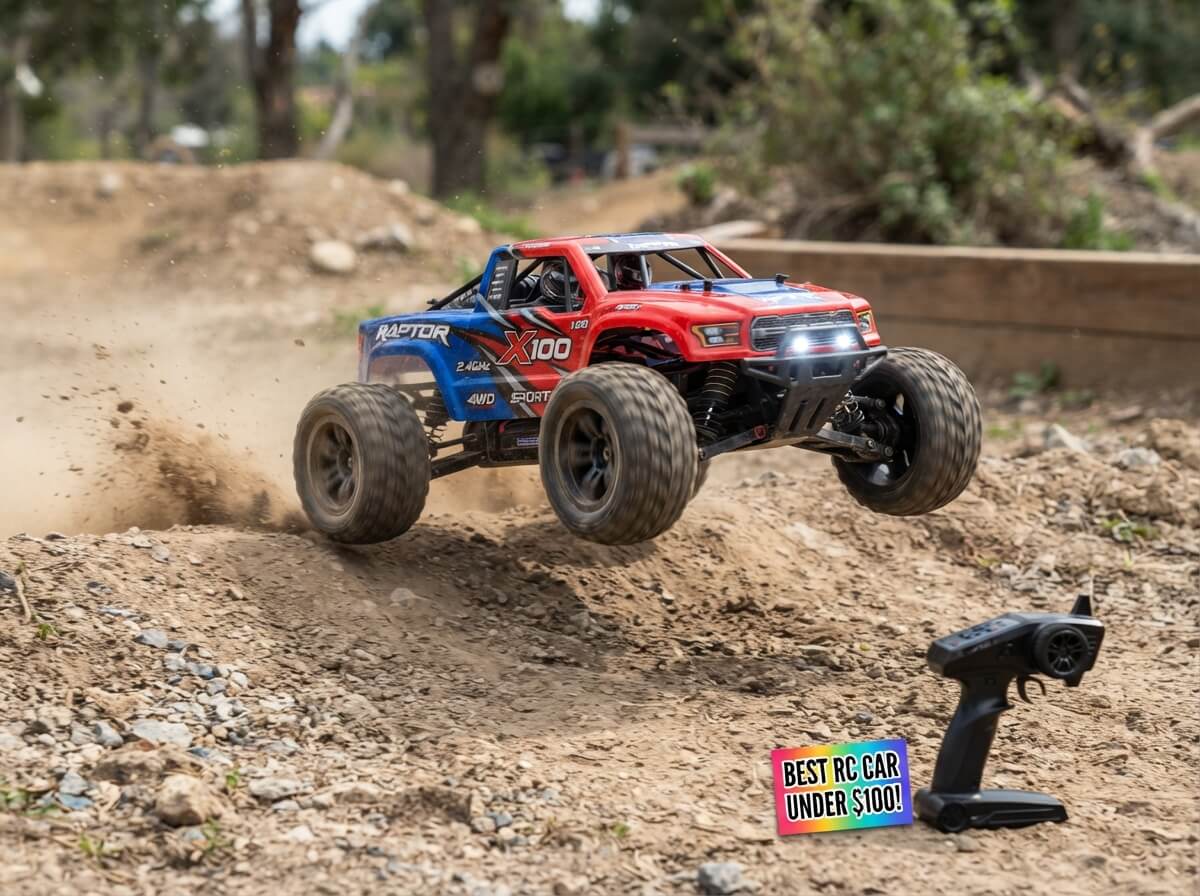
5 Best RC Car Under $100 In 2026
Shopping for the best RC car under $100 can feel messy. Hundreds of listings promise “super speed” and “crazy stunts,” and many of them look almost the same. Prices are low enough that you do not want to waste money, but high enough that a bad pick stings.
This roundup cuts through that noise. It covers five popular remote control cars that sit in the budget range, from stunt flippers for young kids to fast 4WD trucks that can handle grass and gravel. Each review explains what the car is, who it suits, how it likely performs, and where it falls short.
One note before we start. The details here come from the product listings and from how cars in this category usually behave. Exact price, battery life, and range can change between batches and sellers. Always read the current listing before you buy.
Quick Picks at a Glance
| Product | Best For | Top Speed (Listed) | Standout Trait |
|---|---|---|---|
| QUNREDA 4WD Stunt Car | Kids ages 6-12 who love tricks | Not a speed-focused toy | LED lights, 360° flips, USB-C modular batteries |
| BLUEJAY 2.4GHz RC Car | Beginners who want easy speed | 33 km/h | Simple, fast, no-fuss driving |
| Threeking Flip Stunt Car | Younger kids and indoor play | Moderate | Flip-and-spin stunt play |
| 1:18 4WD 40 km/h RC Car | Kids and teens who want real speed | 40 km/h | 4WD grip at a higher top speed |
| TENSSENX 1:18 All Terrain Truck | Families and outdoor fans | 40 km/h | Two batteries and an off-road build |
What Makes an RC Car “Good” at This Price?
A good budget RC car does three things well. It drives smoothly, it survives crashes, and it keeps running long enough to be fun.
At this price, you will not get the brushless motors, metal gears, and oil-filled shocks that hobby-grade cars use. You also will not get the long list of replacement parts that serious hobbyists want. What you get instead is a ready-to-run toy-grade car that works right out of the box.
That is a fine trade for most buyers. Beginners rarely need hobby-grade parts. They need a car that charges, connects, and drives without a headache.
The cars below all use the 2.4GHz radio system. That matters a lot. Older toy cars used basic radio signals that clashed when two people played in the same spot. A 2.4GHz remote picks its own channel, so friends can race side by side without crossing signals.
How These Cars Were Compared
Each car got the same checklist. That keeps the comparison fair and easy to follow.
- Build and design: Does it look sturdy and well put together?
- Speed and control: Does the listed top speed match the intended user?
- Battery setup: How many batteries come in the box, and how do they charge?
- Surface handling: Can it roll on grass, pavement, or only on smooth floors?
- Ease of use: Can a beginner drive it in minutes?
- Value: Does the feature list justify the price?
Keep one honest point in mind. Budget RC cars vary in quality from one batch to another. A great listing does not guarantee a flawless car. Read recent buyer feedback and check the return policy.
1. QUNREDA Remote Control Car (4WD Stunt Car with LED Lights and 360° Flips)
Product Description
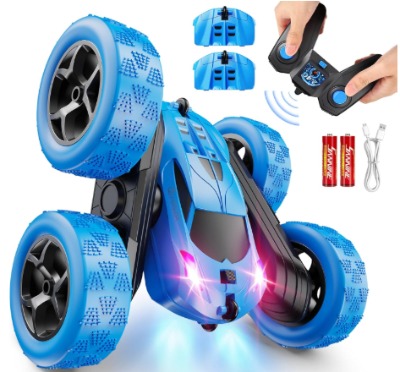
The QUNREDA is a 4WD stunt car made for kids in the 6 to 12 age range. It focuses on tricks more than raw speed. The listing highlights LED lights, 360° flips, a 2.4GHz remote, and upgraded USB-C modular batteries.
The blue version looks bold and toy-like, which kids tend to love. The LED lights add a fun glow, especially in a dim room or at dusk.
Best Use Cases
This car fits best in these situations:
- Birthday gifts for boys and girls in the 6 to 12 range
- Indoor play on hard floors and low carpet
- Backyard or driveway stunt sessions
- Kids who enjoy flips, spins, and tricks more than top speed
Key Features Explained Simply
4WD (four-wheel drive): All four wheels get power. That gives better grip and helps the car climb small bumps and crawl out of tight spots.
360° flips: The car can spin through a full flip when the driver triggers it. Stunt cars like this usually flip off a small ramp or a quick burst of power. It is more about showing off than racing.
LED lights: The lights make the car easier to spot and add a cool look. They do not change the driving, but kids enjoy them.
2.4GHz remote: The signal stays steady and avoids clashes with other remotes. Several kids can play together without trouble.
USB-C modular batteries: This is the standout feature. You can swap batteries quickly instead of waiting for one to finish charging. USB-C also means you probably own a cable already, which is handy for families that use phones and tablets with the same port.
Real-Life Usage Insight
In a typical home setup, a car like this gets most of its use on a living room floor or a paved driveway. Kids drive in short bursts, flip the car over and over, and then hand the remote to a friend. Battery swaps matter a lot in that routine. A child who finishes one battery can pop in the next and keep playing, which cuts down on the “it’s dead again” complaints.
Parents should still set a rule about where to play. Stunt cars bounce, and a flip into a wall or a table leg can leave a mark.
Performance Discussion
Do not expect fast racing speed here. The design points toward agility and tricks, not top-end power. The 4WD system gives decent traction on flat ground, and the flips add excitement.
On rough grass or deep gravel, small stunt cars tend to struggle. The wheels are usually smaller and the ground clearance is lower than on a truck-style car. Stick to pavement, smooth concrete, wood floors, or short, dry grass.
Ease of Use
The 2.4GHz remote is simple and pairs quickly in most cases. A child in the target age range can learn the basics in a few minutes. The modular batteries also make the car easy for parents to manage, since swapping a battery is easier than dealing with a built-in pack.
Pros and Cons
Pros
- Fun stunt play with 360° flips
- USB-C modular batteries allow quick swaps
- LED lights add visual appeal
- 4WD gives better grip than basic two-wheel cars
- Good gift pick for ages 6 to 12
Cons
- Not built for high speed
- Weaker on rough outdoor ground
- Stunt play can wear parts over time
- Battery life depends on use and might feel short for long sessions
Value for Money
For the price range, the QUNREDA offers a lot of play variety. The modular batteries are the real value boost, since extra run time is the number one thing kids want from an RC car. If your child loves tricks, the money goes a long way here. If you want a speedy racer, look at the faster picks below.
2. BLUEJAY Remote Control Car (2.4GHz High Speed, 33 KM/H)
Product Description
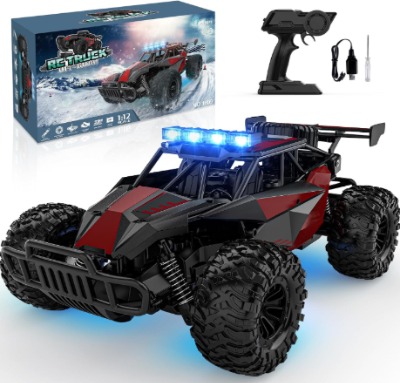
The BLUEJAY is a straightforward high-speed RC car. The listing points to a top speed of 33 km/h, which equals roughly 20 mph. That sounds fast for a toy, and in a small yard or a park it really does feel quick.
It uses a 2.4GHz remote, so it connects cleanly and avoids signal mix-ups. The design leans toward simple fun rather than a long feature list.
Best Use Cases
This one suits:
- Beginners who want their first “fast” RC car
- Kids and teens who like racing in open areas
- Parking lots, wide driveways, and empty courts
- Gift buyers who want a no-fuss option
Key Features Explained Simply
33 km/h top speed: That is about 20 mph. For a small toy car, it covers ground quickly and gives a real sense of speed. Skilled drivers will enjoy the challenge of steering at that pace.
2.4GHz control: The remote locks onto the car without clashing with other nearby remotes. Range is usually decent in open areas, though walls and distance can weaken the signal.
High-speed design: The body and wheels aim at quick runs on smooth ground. It does not carry a long list of gimmicks, so it keeps the focus on driving.
Real-Life Usage Insight
A fast RC car feels very different from a slow one. In a typical test of a car like this, new drivers often crash within the first few minutes. They push the trigger too hard, turn too late, and hit a curb. That is normal, and it is part of the learning curve.
The best approach is to start in a wide, open area with nothing to hit. Practice gentle throttle first. After a few runs, steering becomes natural and the speed turns from scary into fun.
Performance Discussion
At 33 km/h, this car beats most basic toy cars by a wide margin. It runs best on smooth, flat surfaces such as asphalt, concrete, or a hard court. On grass or loose dirt, speed drops and the wheels can bog down.
Quick turns at top speed might cause the car to slide or flip. That is true for nearly every fast RC car, not just this one. Slow down before corners and the car lasts longer.
Ease of Use
Setup stays simple. Charge the battery, switch on the car, switch on the remote, and drive. There are no confusing modes to learn, which helps new drivers a lot.
Younger kids might find the speed hard to handle. A parent can help by showing gentle throttle control at first.
Pros and Cons
Pros
- Solid 33 km/h listed top speed
- Simple setup and easy controls
- 2.4GHz signal for smooth play
- Good first “fast” RC car
- Works well in open paved areas
Cons
- Speed can overwhelm very young kids
- Less capable on rough terrain
- Fewer extras than stunt cars
- Crashes at speed can damage the body or wheels over time
Value for Money
The BLUEJAY gives strong speed for a modest price. If your main goal is a quick car that a beginner can drive right away, it delivers. You will not find a long list of extras, but you also will not pay for features you do not need.
3. Threeking Remote Control Car (RC Flip Stunt Car for Kids 6+)
Product Description
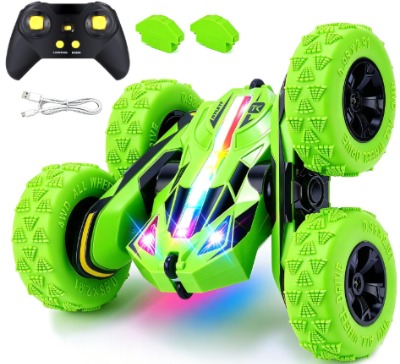
The Threeking is a flip stunt car aimed at kids aged six and up. Like the QUNREDA, it puts tricks ahead of speed. The idea is simple: drive, launch, flip, and repeat.
This type of car often has a wide body, big wheels, and a design that lets it land on either side and keep going. That makes it forgiving for younger players.
Best Use Cases
Pick this car for:
- Young kids who want playful, silly fun
- Indoor use on hard floors
- Small yards and patios
- Holiday and birthday gifts
Key Features Explained Simply
Flip stunt action: The car can flip over itself and land on its wheels or its back, then drive off again. Kids enjoy the surprise and the show.
Ages 6+ design: The controls stay simple, and the car aims at tough, forgiving play. Parents can hand it over without a long setup.
Remote control: Most cars in this category use a simple two-stick or wheel-and-trigger remote. Check the listing to confirm the exact control style and frequency.
Real-Life Usage Insight
Stunt cars like this get the most use as living room toys. A typical session includes a pile of cushions turned into ramps, a few flips, and lots of laughing. Because these cars take bumps well, kids rarely worry about crashing them.
Parents often like this style too. The car is slower and less likely to smash into furniture at high speed. That keeps damage low and stress levels lower.
Performance Discussion
Expect moderate speed and lots of action. The car turns quickly and moves around in tight spaces, which makes it a good indoor option. Outdoors, it works best on smooth ground.
Do not expect strong performance on thick grass, gravel, or dirt. The small wheels and low clearance limit its off-road ability. Think of it as a toy built for tricks, not trails.
Ease of Use
This is one of the easiest cars on the list for young kids. The controls are simple, the car recovers from flips, and the play style needs very little skill. Younger kids can enjoy it right away.
Charging details depend on the model. Check what comes in the box so you know how long the first charge might take.
Pros and Cons
Pros
- Fun flip and stunt play
- Beginner-friendly controls
- Tough, forgiving feel for young kids
- Good indoor choice
- Works well as a gift
Cons
- Not made for speed lovers
- Limited off-road ability
- Older kids might outgrow it fast
- Battery life can feel short during long play sessions
Value for Money
The Threeking works well as a budget gift for younger children. It keeps kids busy and does not demand skill. If your child is nine or older and wants real speed, the faster cars below make more sense. For six- and seven-year-olds, this one hits the sweet spot.
4. 1:18 RC Car (2.4GHz, 4WD, 40 KM/H)
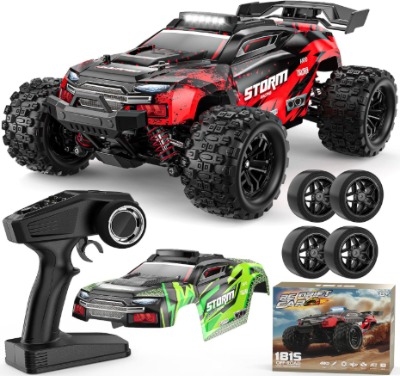
Product Description
This 1:18 scale RC car blends speed with four-wheel drive. The listing mentions a 40 km/h top speed, which equals about 25 mph, and the 2.4GHz remote system.
The 1:18 scale means the car is about one-eighteenth the size of a full-size vehicle. That makes it small enough for easy storage and big enough to drive outdoors. It sits between tiny pocket cars and larger 1:10 models.
Best Use Cases
This car works best for:
- Older kids, teens, and adults who want real speed
- Driveways, parking lots, and smooth open areas
- Casual racing between friends
- Beginners who want a step up from slow toy cars
Key Features Explained Simply
1:18 scale: The car is compact and light. That helps it feel quick and keeps it easy to carry.
4WD: All four wheels pull the car forward. That adds grip, helps with acceleration, and improves handling on mixed surfaces.
40 km/h top speed: That is about 25 mph. It is the fastest listed speed in this roundup, tied with the TENSSENX. At this pace, the car feels exciting and demands more care.
2.4GHz remote: The signal stays clear and allows friends to race together. Range depends on the surroundings.
Real-Life Usage Insight
A car like this tends to attract older kids and adults who enjoy a bit of challenge. In a typical session, drivers start slow, learn how the car slides in corners, and then push harder. Racing a friend around cones or a simple track becomes the main fun.
New drivers should expect a few spills. Light cars at high speed can flip in tight turns, so wide, smooth turns work better than sharp ones.
Performance Discussion
Four-wheel drive and 40 km/h give this car a real edge over simpler models. Acceleration feels punchy, and the car handles pavement well. On grass, it slows down but keeps moving better than a two-wheel-drive car would.
Because the car is small and light, it reacts quickly to steering. That is great for skilled drivers and tricky for total beginners. Practice in a safe area first.
Ease of Use
Setup stays simple. Charge, power up, pair, and go. The controls follow a standard layout, so new users adjust fast.
The only challenge is speed control. Gentle throttle input helps beginners avoid constant crashes.
Pros and Cons
Pros
- 40 km/h listed top speed
- 4WD for better grip and control
- Compact 1:18 size
- 2.4GHz remote for smooth multi-car racing
- Good step up from basic toy cars
Cons
- Speed can be too much for young kids
- Light body can flip in sharp turns
- Not a true rough-terrain truck
- Limited details in the listing name, so read the full description
Value for Money
For a price under $100, a 4WD 40 km/h car offers strong speed. It does not carry flashy extras, but it covers the basics well. If speed matters most, this is an excellent value pick.
5. TENSSENX 1:18 Scale All Terrain RC Car (40 KPH, 4WD, 2 Batteries)
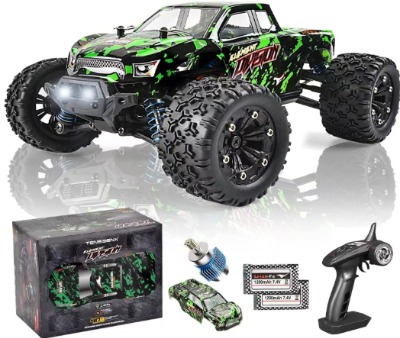
Product Description
The TENSSENX is a 1:18 scale off-road monster truck with 4WD, a listed 40 kph top speed, and two rechargeable batteries. The listing calls it an “all terrain” 4×4 truck, and it targets both kids and adults.
Monster truck styling usually means bigger tires, higher ground clearance, and a rugged look. That design helps on uneven ground. The two included batteries also stand out, since most competing cars ship with just one.
Best Use Cases
This truck fits:
- Backyard adventures on grass and dirt
- Family play with kids and adults together
- Gravel paths, sand, and light off-road areas
- Gifts for boys and girls, teens, and grown-up hobby fans
- Anyone who wants more run time per charge session
Key Features Explained Simply
All terrain design: The truck uses larger, grippier tires and a taller stance. That helps it roll over small bumps, grass, and loose ground better than a flat stunt car.
4X4 (four-wheel drive): Every wheel pulls. This gives the truck its climbing and grip power.
40 kph top speed: The same top speed as the other 1:18 car. On smooth ground it moves fast. On grass and dirt, expect lower real speeds.
Two rechargeable batteries: You can run one while charging the other. This doubles the fun time in a single outing.
Monster truck body: The body looks tough and helps protect parts in light crashes.
Real-Life Usage Insight
This truck suits a weekend afternoon better than any other car on the list. A typical outing includes a park or yard, a few cones or sticks as obstacles, and a swap to the second battery after the first one runs low. That extra battery stretches the session and avoids the mid-afternoon “the car is dead” moment.
Families also like that the truck suits both kids and adults. A parent can drive alongside a child without feeling like they are using a baby toy.
Performance Discussion
On pavement, the TENSSENX moves quickly and holds its line well. On grass, it slows a bit but keeps going. On gravel or dirt, the bigger tires and 4WD help it push through where smaller cars stall.
Do not expect it to crawl over big rocks or deep mud. This is still a toy-grade truck, not a hobby-grade crawler. Light off-road is its sweet spot.
After running through water or mud, wipe the truck down. Most cars in this price range have limited water protection unless the listing clearly says otherwise.
Ease of Use
The truck follows a standard 2.4GHz remote setup. Switch on both, pair, and drive. Beginners can start in minutes.
Because of the speed, younger kids might need help. An adult can supervise and teach throttle control.
Pros and Cons
Pros
- Two rechargeable batteries for longer play
- 4WD and monster truck design for rougher ground
- 40 kph listed top speed
- Suits both kids and adults
- Strong all-around value
Cons
- Speed can overwhelm very young kids
- Not a true hobby-grade off-roader
- Real-world speed drops on grass and dirt
- Water and mud resistance is limited unless stated
Value for Money
This is the best all-rounder in the roundup. Two batteries, 4WD, an off-road build, and solid speed make it a strong package for the price. You pay for a complete play session, not just a car.
Comparison Insights: How the Five Cars Stack Up
Now let’s put the cars side by side, so you can see where each one wins.
Speed
The 1:18 40 km/h car and the TENSSENX share the top listed speed at 40 km/h. The BLUEJAY follows at 33 km/h. The two stunt cars, QUNREDA and Threeking, focus on tricks instead of straight-line pace.
Terrain Handling
The TENSSENX leads here with its monster truck build and 4WD. The 1:18 4WD car comes next, since it also uses four-wheel drive. The BLUEJAY works best on smooth ground. The stunt cars stay happiest on hard floors and pavement.
Battery Setup
The TENSSENX includes two batteries, which gives it the longest play time per outing. The QUNREDA uses USB-C modular batteries, which makes swaps simple and charging easy. The others list standard battery setups, so check the current listing.
Age Fit
The QUNREDA and Threeking suit kids in the six-plus range. The BLUEJAY works for beginners of many ages. The two 1:18 cars suit older kids, teens, and adults.
Best for Gifts
The QUNREDA stands out as a gift because of the lights, the flips, and the battery system. The TENSSENX also makes a great gift for families, since it covers kids and adults alike.
Best for Beginners
The Threeking and the BLUEJAY win on simplicity. The Threeking is easier for young kids. The BLUEJAY is easier for beginners who want speed.
Best Value
The TENSSENX leads on total value thanks to its two batteries and off-road build. The 1:18 4WD car follows for pure speed per dollar.
Buying Guide: What to Check Before You Pick
A good buying decision starts with a few simple questions. Use this guide to narrow down your options.
1. Think About the Driver’s Age
Age affects almost everything. Kids in the six-to-eight range do better with slower, forgiving stunt cars. Nine and up can handle faster cars with more control. Teens and adults usually want speed and rugged builds.
A car that feels too fast frustrates young kids. A car that feels too slow bores older ones. Match the car to the driver.
2. Decide Where You Will Drive
Surface matters more than most buyers expect. Indoor floors suit small stunt cars. Pavement suits fast on-road cars. Grass, dirt, and gravel need bigger wheels and ground clearance.
If you plan to drive in several places, a monster truck style gives the most flexibility.
3. Look at Speed Honestly
Higher speed does not always mean more fun. A 40 km/h car looks amazing in the listing, but it can feel hard to control. Beginners often enjoy a car in the 20 to 30 km/h range more than something too fast.
Also remember that listed top speed is measured under ideal conditions. Real-world speed is usually lower, especially on rough ground.
4. Check Battery Count and Charging
Battery life is the most common complaint in this price range. Most toy-grade cars run for a short stretch per charge, and then they need a long recharge.
Look for these helpful features:
- Two batteries in the box
- Swappable battery packs
- USB charging, especially USB-C
- Clear run time information
A second battery doubles your play time, so it is worth paying a bit extra for it.
5. Look at Drive Type
Two-wheel-drive cars cost less, but they struggle on loose ground. Four-wheel drive adds grip, climbing power, and better handling. In this price range, 4WD is a real advantage.
6. Confirm the 2.4GHz Remote
A 2.4GHz remote gives cleaner control and allows several cars to run at the same time. Skip cars with older, basic radio systems if you can.
7. Check Build Quality and Spare Parts
Cheap cars break. Wheels crack, arms bend, and bodies scuff. Look at product photos, read feedback, and see whether the seller offers spare parts or a warranty.
8. Read the Return Policy
Budget RC cars sometimes arrive with small defects. A clear return or replacement policy protects you. This is especially important for gifts.
9. Think About Water Resistance
Most toy-grade RC cars are not made for puddles, rain, or mud. Unless the listing clearly states water resistance, assume the car should stay dry. Wipe it down after outdoor use.
10. Set a Realistic Budget
Under $100 gets you a solid toy-grade car, and sometimes a bundle with extra batteries. It does not get you hobby-grade parts or fully waterproof electronics. Keep expectations realistic and you will enjoy the car more.
Who Should Buy These Cars?
Different buyers need different cars. Here is a simple guide.
Parents Buying for Kids Aged 6 to 8
The Threeking and QUNREDA fit best. Both focus on tricks, bright looks, and simple control. They also stay slower, which keeps indoor play safer.
Parents Buying for Kids Aged 9 to 12
The QUNREDA still works well, especially because of the battery system. For kids who want speed, the BLUEJAY and the 1:18 cars step things up.
Teens and Adults New to RC
The TENSSENX and the 1:18 4WD car give the best mix of speed and control. They also feel less like baby toys.
Families Who Want Shared Play
The TENSSENX stands out. With two batteries and an off-road build, adults and kids can take turns without long waits.
Gift Buyers on a Tight Budget
The QUNREDA and the TENSSENX make strong gift picks. Both feel complete out of the box and offer lots of play value.
People Who Want a Serious Hobby
None of these cars replace a hobby-grade model. If you want brushless motors, metal parts, and full upgrades, plan for a bigger budget. That said, these cars work well as a first step into the hobby.
Common Mistakes to Avoid
Even a good car disappoints when buyers make avoidable errors. Watch out for these.
Buying Based on Top Speed Alone
Speed numbers look exciting, but control matters more. A fast car that flips in every turn quickly stops being fun. Pick a speed that fits the driver’s skill.
Ignoring the Driving Surface
Many buyers pick a small stunt car and then try it on thick grass. The car struggles and the buyer feels let down. Match the car to the terrain.
Skipping the Battery Details
Short run time ruins the fun fast. Always check how many batteries come in the box and how long they take to charge. Think about buying a spare battery if the car supports it.
Letting Young Kids Drive Too Fast
Fast cars can hurt fingers, toes, and pets. Young kids should start with slower cars and supervision.
Driving in Water and Mud
Water can damage the electronics. Avoid puddles and wet grass unless the listing clearly states water protection. Dry the car after every outdoor run.
Forgetting to Charge Everything
Many new owners forget that the remote also needs power. Check the remote batteries before each session. Also charge the car fully before the first run.
Crashing at Full Speed on Purpose
Hard crashes bend parts and crack plastic. A few bumps are normal, but repeated hard hits shorten the car’s life. Gentle driving keeps the car running longer.
Ignoring the Return Policy
Buying from an unclear seller with no return option adds risk. Choose sellers with clear policies and responsive support.
Expecting Hobby-Grade Results
Toy-grade cars do not carry the same parts or power as hobby-grade models. Set your expectations at the right level and you will enjoy the car more.
Skipping Basic Care
A quick wipe-down, a check of the wheels, and a look at the screws keep the car healthy. Small habits make a big difference.
Simple Care Tips to Make Your RC Car Last
A little care goes a long way. Follow these easy habits.
- Let the battery cool before you charge it
- Unplug the charger when the battery is full
- Store the car in a dry place
- Remove batteries from the remote if you will not use it for a while
- Clean dirt and grass from the wheels
- Tighten loose screws now and then
- Avoid leaving the car in hot cars or direct sun
These steps cost nothing and prevent most common problems.
Frequently Asked Questions
What is the best RC car under $100 for beginners?
The BLUEJAY and the Threeking work well for beginners. The BLUEJAY suits those who want speed with simple controls. The Threeking suits younger kids who want forgiving stunt play.
What is the best RC car under $100 for outdoor use?
The TENSSENX 1:18 All Terrain truck is the strongest pick. Its monster truck build, 4WD, and two batteries make it better for grass, gravel, and light off-road use.
How fast is a 40 km/h RC car?
A 40 km/h car moves at about 25 mph. That sounds slow compared with a real car, but it feels very quick for a small toy.
Are these cars waterproof?
Not unless the listing clearly says so. Assume they are not, and keep them out of puddles and heavy rain.
Do cheap RC cars last long?
Yes, if you treat them well. Gentle driving, regular cleaning, and good battery habits help a lot. Still, expect some wear over time.
How long do the batteries last?
Run time depends on the battery size, driving style, and terrain. Many cars in this range give a short play session per charge. A second battery makes a big difference.
Can adults enjoy these cars?
Yes. The 1:18 4WD car and the TENSSENX truck suit adults who want casual, fun driving.
Final Verdict
So, what is the best RC car under $100? The answer depends on who will drive it and where.
Best overall: The TENSSENX 1:18 Scale All Terrain RC Car takes the top spot. It combines 4WD, a rugged monster truck design, a listed 40 kph top speed, and two rechargeable batteries. That mix gives it the best balance of speed, durability, and play time.
Best for speed on a budget: The 1:18 4WD 40 KM/H RC Car offers strong pace and good grip. It suits older kids and adults who want a quick car without a big price tag.
Best for beginners who want simple speed: The BLUEJAY 2.4GHz RC Car gives a fast 33 km/h run with easy controls. It makes a great first step into faster RC cars.
Best for stunts and gifts: The QUNREDA 4WD Stunt Car stands out for its flips, LED lights, and USB-C modular batteries. It makes a fun and practical gift for kids aged six to twelve.
Best for young kids: The Threeking Flip Stunt Car keeps things simple, silly, and forgiving. It works well for younger children and indoor play.
If you want a single recommendation, go with the TENSSENX. It covers the most ground for the most people. If you shop for a younger child, the QUNREDA or Threeking fits better. If you only care about speed, the 1:18 40 km/h car gets you there.
Whichever car you pick, keep expectations realistic, drive with care, and check the current listing for the latest price and details. A good budget RC car brings plenty of fun, and these five prove you do not need to spend a lot to get it.