3 Best Losi Rc Car In 2026
As an Amazon Associate we earn from qualifying purchases.
Shopping for a best Losi RC car can feel confusing at first. Many models look similar in photos, yet they differ in speed, build quality and how much work they need before you can drive. This guide helps beginners see those differences in plain words, so you can pick a car that fits your space, your budget and your patience.
The three products below share a common theme: each is a remote control car that runs on rechargeable batteries and is sold ready to drive. Two come from the same family of hobby-grade vehicles, while the others are priced and built for different kinds of driving. This comparison rests on the listed features and typical use of each model, not on personal testing.


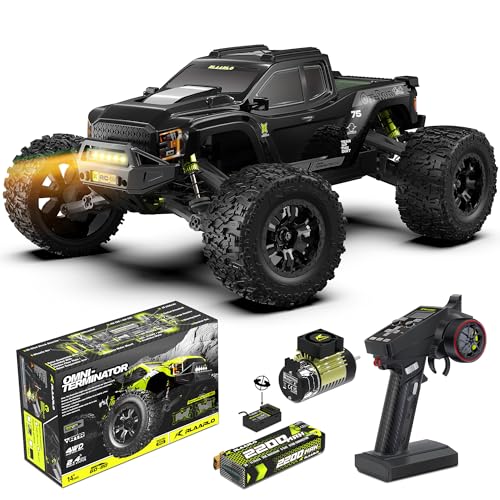
1. Losi Micro-B 2 Wheel Drive Buggy White: best for beginners on a budget
The Losi Micro-B 2 Wheel Drive Buggy is a small, two-wheel drive buggy. It is sold as a ready-to-run hobby-grade car, so the box includes everything needed to start driving. It suits someone who wants a first taste of RC racing without a large spending commitment.
What it is and who it suits
This buggy is part of Losi’s micro class, which means it is compact enough to run on a table, a driveway or an indoor space. Its design is inspired by the TLR style used in racing, and it is meant to be a low-cost entry into the sport.
Parents buying for a child and adults new to the hobby often start with a car like this. A smaller footprint also means less space is needed to get a feel for steering.
Key features in simple words
The car uses an aluminum chassis, which is the metal frame that holds the parts together. A metal frame generally resists flexing better than a thin plastic one, which helps the car keep its shape over time. Oil-filled shocks help soften bumps by slowing the spring movement, so the wheels stay in contact with the ground more smoothly. The listed top speed is 13 mph, which is quick for a car of this size.
Real-life use
In practice, a small car like this is easy to carry and set up. You unpack it, charge the battery and start driving. Because of its size, it reacts quickly to steering input, so it may feel lively in tight spaces such as a garage floor or a cleared patio. Smooth pavement, a tabletop course or a basic indoor track suits it better than thick grass or gravel.
Performance and battery
The listed charge time is one hour, with about 20 minutes of nonstop running. That is a practical amount of fun for a short session. Many owners find they recharge between runs, so a spare battery can be useful, though it is not included in the listed items. Planning a few short sessions instead of one long one can make the most of a single charge.
Ease of use and value for money
Because it arrives fully assembled, there is little to build or adjust. This makes it one of the simpler starting points in this round-up. At $89.99, it is the lowest-priced model here, which gives it a strong value case for a first RC car. Checking the current price and included items before you buy is always a good idea, since listings can change.
Pros
- Fully assembled and ready to drive out of the box
- Lowest price among the three models in this round-up
- Compact size suits small spaces and younger drivers
- Aluminum chassis and oil-filled shocks add durability
Cons
- Around 20 minutes of run time means frequent recharging
- Two-wheel drive offers less grip than four-wheel models
- Small size can make it harder to see from far away
- Not designed for rough outdoor terrain or large jumps
2. 1/14 Brushless RC Cars: best for fast outdoor bashing
This 1/14 scale four-wheel drive truggy is built for speed and rough outdoor driving. The name “brushless” refers to the type of motor, which is generally more efficient and powerful than older brushed motors. Brushless motors have no brushes to wear down, so they usually need less routine maintenance. It suits adults or experienced younger drivers who want a fast, tough vehicle.
What it is and who it suits
A truggy is a type of off-road vehicle that blends a truck and a buggy design. Truggies usually have a rugged chassis, large tires and enough ground clearance to handle jumps, ruts and loose dirt. This model is a ready-to-run unit with a waterproof receiver and electronics. It is aimed at people who like to drive hard and push a car to its limits.
Ready-to-run means you can start driving once the battery is charged and the transmitter is set up. You do not need to assemble the car from a kit. Beginners who want a simple start still need to learn safe driving habits, though, because high speeds can cause damage to the car and to nearby people or property.
Key features in simple words
Chassis and durability
The chassis is made from 6061 aluminum, a strong metal used in many hobby parts. The laser-etched plate sits on a metal center body support with a composite brace. Together, these parts are designed to resist impacts and reduce damage during hard landings. A stiffer frame can also help the suspension work more predictably over bumps.
The steel differential outdrives and metal gearbox internals add strength to the drivetrain. The composite front bumper helps protect the body when the car hits walls or obstacles. Even so, no car is fully crash-proof, and hard use will still wear parts over time. Checking screws, driveshafts and tires after each run is a good habit that helps catch small problems early.
Motor, speed and battery
The car uses a 4200KV brushless motor, where KV describes how fast the motor spins per volt. For example, a higher KV motor spins faster on the same voltage, but it also draws more current and can run hotter. A 45A electronic speed controller, or ESC, manages power from the battery to the motor. The listed top speed is 50+ mph, which places it firmly in the fast category.
It is designed for a 3S battery, which is a three-cell lithium pack. The listed playtime is up to 44 minutes when dual batteries are used. Charging times and battery choice will affect how much fun you get per session. Lithium packs need a suitable charger and should be stored and charged according to the manufacturer’s instructions.
Terrain and tires
The 111mm multi-terrain tires are described as suitable for grass, gravel and dirt roads. Paddle-style tires are listed for sand, snow and mud. Pre-mounted sponge inserts help the tires keep their shape at high speed. Tire choice matters because the same car can feel very different on loose sand compared with hard-packed dirt.
Real-life use
In everyday use, a car this fast tends to feel powerful on open ground. Acceleration from a standstill is strong, so throttle control matters a great deal. Beginners often find it helpful to start slowly in an open area before pushing the speed. Gradual throttle inputs also reduce the chance of flipping the truggy during a sudden launch.
Ease of use and value for money
The adjustable shocks are described as helping control at speed, which can make the car feel more settled on rough ground. Because the power is high, however, the car can be harder to handle than slower models.
At $118.99, it sits in the middle of the price range here and offers a lot of speed for the money. Buyers should still budget for spare parts, extra batteries and a charger if they do not already own them.
Pros
- Very high listed top speed for an outdoor-focused car
- Strong aluminum chassis and metal drivetrain parts
- Works on several surfaces, including grass, dirt and snow
- Upgradeable electronics and a waterproof receiver
Cons
- High speed and power can be difficult for complete beginners
- Dual batteries are needed for the longest listed playtime
- Not suited to indoor or small-space driving
- Parts may wear faster under hard, frequent bashing
3. RIAARIO 1/10 Brushless RC Cars: best for control and all-round off-road driving
The RIAARIO is a larger 1/10 scale four-wheel drive monster truck. It combines high listed speed with features meant to help the driver keep control. It suits buyers who want a capable off-road vehicle with more built-in stability.
Many shoppers look at this model because it tries to bridge two goals. It offers the excitement of a fast truck while adding support that can make driving feel less intimidating. That balance is the main reason it earns a place in this round-up.
What it is and who it suits
A monster truck is a large off-road vehicle with big tires and a tall body. The 1/10 scale means the model is about one-tenth the size of a full-size vehicle. This car is aimed at drivers who want a balance between speed and manageable handling.
It fits best with hobbyists who plan to drive outdoors on varied ground, such as yards, parks and dirt tracks. Someone who only wants a small indoor car may find it too large. The size also means the truck needs more open space to run safely.
Key features in simple words
The 3650 2650KV motor pairs with a 60A ESC and a metal heat sink with a cooling fan. The heat sink and fan help move heat away from the electronics during long runs. A built-in gyro helps stabilize steering, which can make the car feel more predictable.
The 11KG metal-gear servo controls steering with strength. Throttle settings of 0%, 25%, 70% and 100% let a driver ease into speed. This can be a helpful feature for someone still learning the controls.
In practice, the throttle steps mean a driver can start at a low setting and move up only when comfortable. The gyro then works alongside the steering to keep the truck tracking straight. Together, these features reduce the chance of sudden spins during early runs.
Chassis, body and build
The 2.5 mm hardened aluminum chassis forms the base of the truck. Carbon-fiber reinforced upper deck and shock towers add rigidity where stress is highest. The reinforced A-arms, thick PC body and composite bumper are made for demanding runs and jumps and landings, so the chassis sits well above the ground when the truck is driven hard.
Parts that take the most impact are the ones receiving the most reinforcement. This approach is common in rugged RC designs, where the suspension and mounting points absorb repeated knocks. A sturdier frame can also make it easier to keep alignment over time.
Drivetrain and power delivery
The CNC center differential and reinforced center driveshaft send power to all four wheels. This setup is described as efficient and consistent, which helps the truck pull out of corners. Precision CNC gears are also listed as a way to reduce drivetrain noise at high speed.
Four-wheel drive spreads power across every tire, which can help on loose surfaces where a two-wheel drive car might spin. A center differential lets the front and rear wheels turn at different speeds during turns. This is useful when the truck changes direction on uneven ground.
Tires and terrain
Airless all-terrain tires are designed to handle grass, gravel and dirt. The tires do not rely on air pressure, so flats are not a concern in the usual sense. Oil-filled, adjustable shocks help absorb rough impacts and keep the tires in contact with changing surfaces.
Airless tires are useful for drivers who want less maintenance, since there is no pressure to check. However, they may not grip as well on smooth pavement as a tire with a softer compound. Adjustable shocks let the owner tune the ride for different surfaces.
Real-life use
In daily use, this truck tends to feel more composed than the smaller models in this round-up. The gyro and steady steering help when the surface changes quickly. Because the throttle can be limited, a new driver can build confidence before reaching full power.
A typical session might start on a flat lawn at a low throttle setting. Once the driver feels comfortable with braking and turning, they can move to a gravel path or a small dirt jump. Taking this step-by-step approach helps protect the truck and the driver alike.
Performance and battery
The listed top speed of 50+ mph shows that this truck is fast when fully opened up. Strong acceleration comes from the 60A ESC and motor pairing. Battery choice and charging details should be checked before buying, since the data provided does not list playtime.
Speed figures like this are typically reached under ideal conditions, so real results will vary with surface, battery and weather. Buyers should confirm which battery and charger are included or required. Checking these details helps avoid surprises after delivery.
Ease of use and value for money
The throttle limit settings and gyro support make this model one of the more forgiving fast trucks here. Ready-to-run setup means there is little to assemble before the first drive. At $218.48, it is the most expensive model in this round-up, so its value depends on how much a buyer wants its extra features and build.
A buyer who values stability, sturdy parts and gradual throttle control may find the price reasonable. A buyer who mainly wants a simple, low-cost car may prefer one of the lower-priced models. The right choice depends on budget and on the level of control the buyer expects.
Pros
- Throttle limit settings help beginners ease into speed
- Built-in gyro and strong steering support stable handling
- Four-wheel drive and airless tires suit mixed surfaces
- Carbon-fiber and aluminum parts add a sturdy build
Cons
- Highest price of the three models in this round-up
- Large size needs more space to drive safely
- Battery and playtime details are not listed in the data
- Advanced features can add complexity for absolute beginners
Comparison insights: how the three models differ
The three models share a focus on RC cars with rechargeable batteries. They differ mainly in scale, speed, drive layout and price. Knowing those differences helps you match a car to a specific goal, such as learning the basics, driving on rough ground, or getting the most speed for your money.
In performance, the 1/14 truggy has the highest listed top speed, at 50+ mph. The RIAARIO also lists 50+ mph, but adds a gyro and throttle limits that change how that speed feels in practice. The Micro-B is slower, at 13 mph, but its small size makes it lively in tight spaces such as hallways, garages and small indoor areas.
In ease of use, the Micro-B is the simplest choice for a first-time owner. Its small size and low speed reduce the chance of a fast, unexpected crash, and a crash at low speed usually means fewer broken parts. The RIAARIO is the most forgiving of the fast models, thanks to its gyro and throttle settings that help keep the car under control while you learn.
In value for money, the Micro-B has the lowest price at $89.99. The 1/14 truggy sits at $118.99 and offers a lot of speed and off-road capability for that amount. The RIAARIO costs $218.48, so buyers should weigh its extra features against that higher figure and decide if those features matter for how they plan to drive.
Buying guide: key factors explained in plain words
An RC car is easier to pick when you know which factors matter most. Start with the places you plan to drive and the skill level you expect to grow into. The points below explain the main choices in simple terms, so you can compare any model you find, not just the three above.
Scale and size
Scale describes how big the model is compared with a full-size vehicle. Smaller scales, such as 1/14 or micro models, fit into compact spaces like a living room or a driveway corner. Larger scales, such as 1/10, need more room but often feel steadier at speed because their greater weight and wheelbase help them track straight.
Drive system
Two-wheel drive sends power to two wheels, while four-wheel drive sends it to all four. Four-wheel drive usually gives more grip on loose dirt, sand or uneven ground, which helps when you drive over bumps or jumps. Two-wheel drive models tend to be simpler, lighter and less expensive, which suits smooth surfaces and casual driving.
Motor type
Brushless motors are more efficient and powerful than brushed motors, which is why they appear in faster models. A brushed motor is an older design that is simpler and usually slower, but it is often adequate for a basic toy-grade car. Beginners rarely need to choose between them directly, since most ready-to-run cars come with one type already fitted.
Battery and run time
The battery sets how long you can drive before recharging. Listed run times vary a lot with terrain, speed and temperature, so treat any published figure as a rough guide. Check how many batteries come with a model and how long each takes to charge. A spare battery can make sessions feel longer without waiting for a charge to finish.
Speed and control
A high top speed sounds exciting, but control matters more for a first car. A car you can steer confidently at moderate speed will teach you more than a fast one you cannot manage. Features such as throttle limits and gyro stabilization can help a new driver build confidence. Starting with a slower car often makes learning easier and reduces the cost of early mistakes.
Build and durability
Metal parts, such as aluminum chassis plates and steel drivetrain components, generally add strength. Composite bumpers and reinforced arms can help protect a car during bumps and crashes, and they are often easier to replace than a cracked main frame. Still, every car wears with use, so it is worth knowing where spare parts are sold before you need them.
Ready to run or kit
Ready-to-run cars arrive assembled and need only charging and basic setup, such as checking the radio and tire pressure. Kits require building and can teach you more about how the car works, including how the drivetrain and steering connect. For most beginners, a ready-to-run model is the faster way to start driving, while a kit suits someone who enjoys the building process itself.
Who should buy these products
Each of the three models suits a different type of buyer. Matching the car to your needs helps you avoid paying for features you will not use. The guide below pairs each model with a typical buyer.
The Losi Micro-B 2 Wheel Drive Buggy suits someone who wants an affordable first RC car. It is a good fit for younger drivers, households on a tighter budget, and anyone who plans to drive indoors or on a small driveway. Its low speed and simple setup make it approachable. A driver who wants to learn steering and throttle control without a steep learning curve will find it a sensible starting point.
The 1/14 Brushless RC Car suits someone who wants speed and outdoor adventure without spending a great deal. It fits experienced drivers or adults who are ready to handle a fast four-wheel drive truggy. Buyers who plan to drive on grass, dirt, sand or snow may find it especially appealing. Because it is faster than the Micro-B, it rewards drivers who already understand basic control and can keep the car in open space.
The RIAARIO 1/10 Brushless RC Car suits someone who wants speed with more built-in control. It is a good match for a buyer who has space for a larger truck and is willing to spend more. Its throttle limits and gyro make it a practical choice for a learner who wants room to grow.
Buyers who expect to move from a beginner car to a faster one over time may see it as a longer-term option.
Final verdict
No single model is the best Losi RC car for everyone, because each serves a different goal. The Micro-B is the strongest choice for a low-cost, easy start. The 1/14 truggy suits buyers who want fast off-road fun on a moderate budget.
The RIAARIO offers the most built-in control and stability, though it costs the most. For beginners who plan to grow into a fast truck, it may be worth the higher price. Each choice comes down to budget, space and how quickly you want to reach full speed. Think about where you will drive most often, since that affects which model will feel most useful day to day.
In short, match the car to your space, your skill level and your budget. Check the listed run time and battery details before buying, since these affect how much you will drive. Compare what each listing includes, such as the transmitter, battery and charger, so you know what else you may need to buy. A careful choice now can make your first RC experience far more enjoyable.
Frequently Asked Questions
Is a Losi RC car a good choice for a complete beginner?
Yes, many beginners start with a smaller, ready-to-run model. The Micro-B is designed as an easy, affordable entry into RC racing. Starting slowly in an open area helps you learn the controls, and practicing around cones or simple markers can build confidence quickly.
What does brushless mean on an RC car?
Brushless describes the motor type. These motors are generally more efficient and powerful than brushed motors, and they do not use the physical brushes that wear over time in older designs. They are common in faster hobby-grade cars, which is why brushless models usually cost more.
Do I need to assemble these cars before driving?
The listed products are ready to run, so they arrive assembled. You will still need to charge the battery and complete basic setup, such as pairing the transmitter and checking that the wheels turn freely. A kit would require full building, which takes more time and patience.
Which model is best for rough outdoor terrain?
The 1/14 truggy and the RIAARIO are both described as suitable for grass, gravel, dirt and other rough surfaces. The 1/14 model also lists paddle tires for sand, snow and mud. The Micro-B is better suited to smooth, flat surfaces indoors or on a driveway, rather than rough outdoor ground.
How long does one battery charge last?
Listed run times vary by model. The Micro-B lists about 20 minutes of nonstop running after a one-hour charge. Check each product’s battery details before buying, since full playtime depends on the battery setup, the terrain and how hard you drive.
Are these cars suitable for younger children?
The Micro-B is the most compact and simplest model here, so it suits younger drivers with adult supervision. The faster trucks carry more speed and power, so they are generally better for older or experienced drivers. Always review the listed age guidance before purchase.
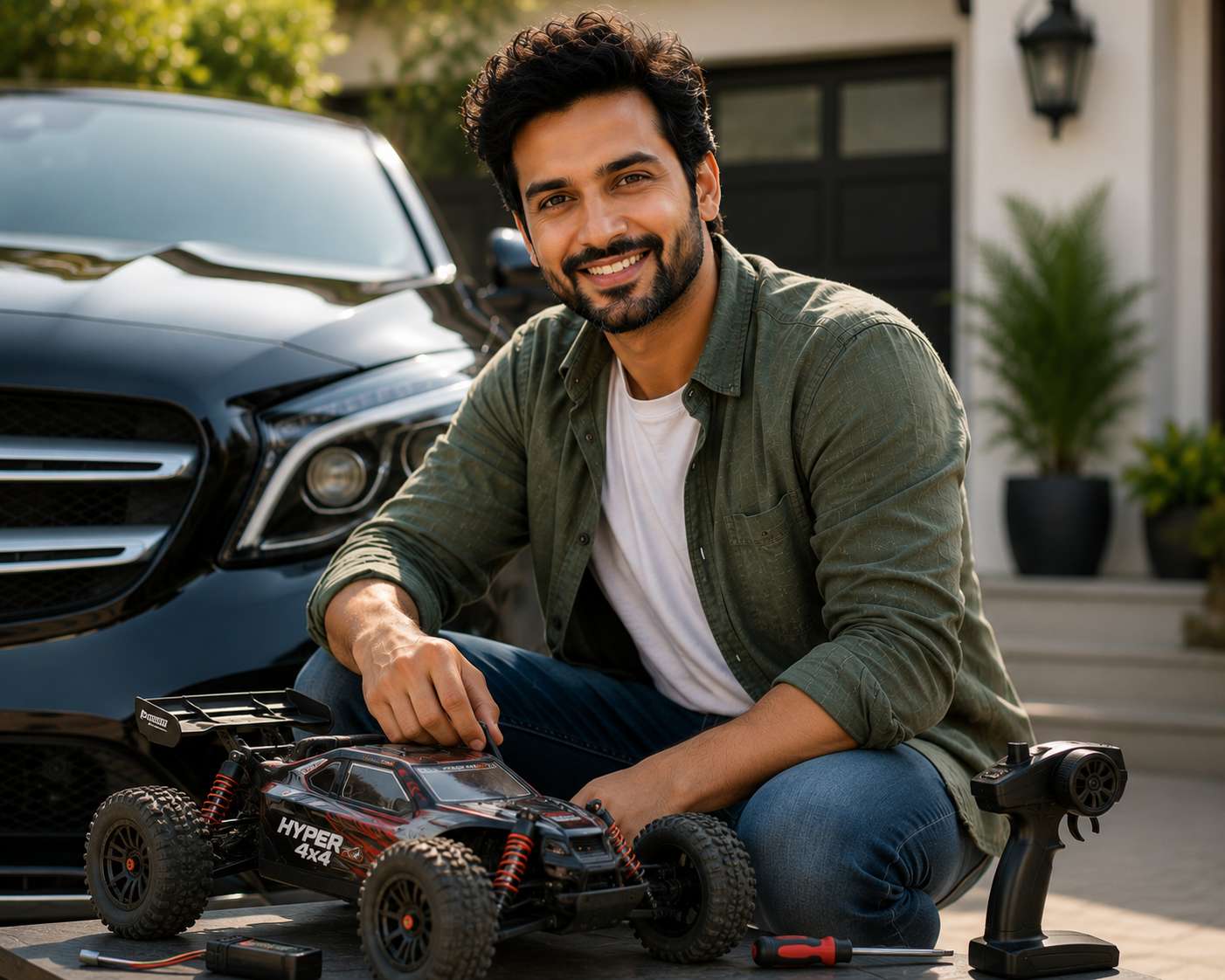
Peterson is an RC hobby enthusiast and product reviewer with a passion for remote-controlled cars, trucks, boats, drones, and accessories. He enjoys testing the latest RC products, comparing features, and sharing practical buying guides to help beginners and experienced hobbyists make informed decisions. Through RCThing.com, Peterson provides honest reviews, maintenance tips, and expert advice to help readers get the most from their RC adventures.