5 Best RC Airplane Battery In 2026
As an Amazon Associate we earn from qualifying purchases.
Picking the best RC airplane battery can feel confusing at first. Many packs look similar, yet they differ in voltage, capacity, connector type and chemistry. This guide helps beginners and hobbyists who want a clear picture before they buy, especially those flying electric planes or radio-controlled aircraft that need a reliable power source.
The five products below share one goal: powering radio-controlled models. Two are lithium polymer (LiPo) packs for electric flight, and three are nickel-metal hydride (NiMH) packs meant for radio receivers. This comparison rests on the listed features and typical use, not on personal testing, so the information reflects what each product states and what this kind of battery generally does.



1. Zeee 3S Lipo Battery 2200mAh 11.1V 50C: best for small electric planes and multi-model use
This is a 3-cell lithium polymer pack rated at 11.1 volts and 2200mAh. It uses an XT60 connector and comes as a two-pack. The listing describes it for use in airplanes, cars, boats, drones and helicopters, so it suits a hobbyist who flies or runs more than one type of model.
Who it suits
This pack fits buyers who want a compact LiPo for light electric aircraft or other small models. Because it is sold as two packs, it also helps those who want spares for longer flying sessions. Always confirm that the voltage, size and plug match your model before buying.
Key features in plain words
The 50C rating describes how quickly the pack can release its energy, which matters for demanding flights. Its listed weight is about 137 grams, which is light enough for many small planes. The XT60 plug is a common high-current connector, so you may need an adapter for other systems.
Daily use and performance
In practice, a pack this size usually feels easy to fit into a compact fuselage. Lighter packs help small planes keep their balance and flight feel. Run times depend on your flying style, throttle use and the model, so the listing does not promise a specific flight length.
Ease of use and charging
Charging requires a balance charger designed for LiPo packs, and the listing stresses this point. The suggested charge rate is 0.5 to 1C, and the charger must support a current range of 1.1 to 2.2 amps. Beginners should read the safety notes before the first charge.
Value for money
At a listed price of $37.99 for two packs, the cost per pack is moderate. The value depends on if you need the specific size and plug. If you fly small electric models, the two-pack format can be a sensible choice.
Pros
- Light weight suits small electric planes
- Sold as a two-pack for spares
- Compatible with many model types
- Clear charging and safety guidance in the listing
Cons
- Requires a LiPo balance charger, which is an extra purchase for some buyers
- XT60 plug may need an adapter on some models
- Seller standing is described as moderate, so checking the listing carefully is wise
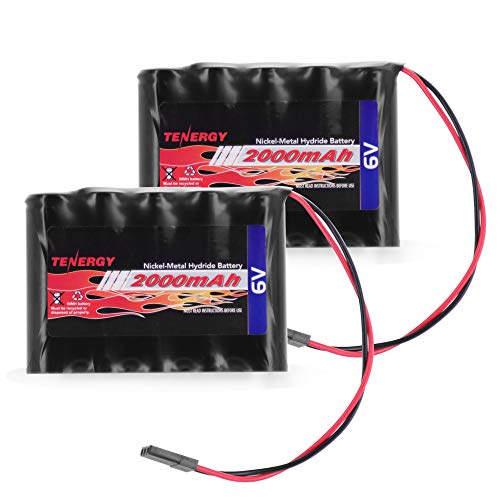
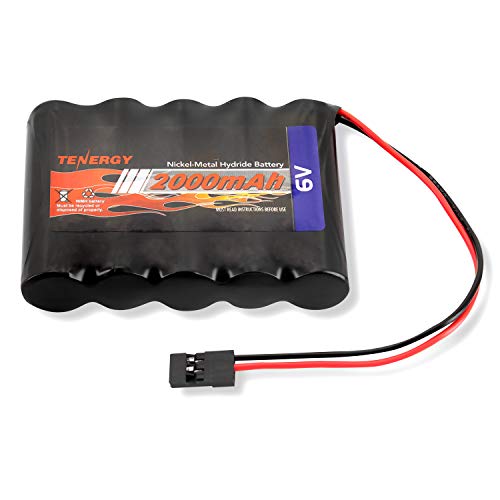
2. Tenergy 2 Pack NiMH Receiver RX Battery: best for radio receiver power on a budget
This is a 6-volt nickel-metal hydride pack rated at 2000mAh, built from five AA-size cells. It uses a Hitec connector and comes as a two-pack. Unlike LiPo packs, this battery is designed mainly to power the radio receiver and servos rather than the motor.
Who it suits
This battery suits hobbyists who need a receiver pack for rad ly plane or helicopter with a Hitec connector. It also suits beginners who want a simple, rechargeable option for the radio side of their model. Check that your receiver uses a compatible connector before buying.
Key features in plain words
NiMH stands for nickel-metal hydride, a rechargeable chemistry that is generally more forgiving to handle than LiPo. The pack weighs about 5 ounces and measures roughly 2.83 by 1.97 by 0.59 inches. Its flat shape helps it fit under a wing or inside a compact fuselage.
Daily use and performance
A receiver pack usually runs quietly in the background, supplying steady power to the receiver and servos. It does not drive the motor, so it works at a much lower load than a flight pack. The listing describes it as suitable for most popular receivers from brands such as Hitec, Futaba and JR.
Ease of use and charging
NiMH packs generally need a charger set for NiMH chemistry, not a LiPo balance charger. This makes them simpler for newcomers to manage. The listing says the pack can be rapidly charged, but you should still follow the charger’s settings closely.
Value for money
At a listed price of $19.99 for two packs, this is a modest outlay. For receiver duty, a pair of packs gives you a spare while one charges. Because the load is light, these packs suit a budget-minded buyer who wants dependable backup power.
Pros
- Simple NiMH chemistry that needs no balance charger
- Sold as a two-pack for easy rotation
- Works with many popular receiver brands
- Flat shape fits many compact models
Cons
- Designed for receivers, not for powering motors
- Hitec connector may not suit every receiver
- Seller standing is described as moderate, so reading recent feedback is sensible
3. OVONIC 3S Lipo Battery 50C 2200mAh 11.1V: best for park flyers and mixed RC use
This is a 3-cell lithium polymer pack rated at 11.1 volts, 2200mAh and 50C. It uses a Dean-style T connector and is sold as a single pack. The listing names several popular park flyer and trainer models, which makes it a practical choice for certain electric planes.
Who it suits
This pack suits pilots who fly park flyers, trainers and similar electric aircraft. It also fits builders who already use Dean-style T connectors. Because it is a single pack, buyers who want spares will need to order more.
Key features in plain words
The Dean-style T connector is a widely used plug in electric flying, known for a secure fit. The pack weighs about 6.6 ounces and measures about 4.17 by 1.3 by 0.9 inches. The listing also asks you to check that each cell reads between 3.7 and 4.2 volts before use.
Daily use and performance
In practice, a pack in this size range usually suits a park flyer where weight and balance matter. The 50C rating indicates a strong discharge capability for demanding flights. Flight time depends on throttle use, weather and the model, so the listing does not promise a set duration.
Ease of use and charging
Like other LiPo packs, this one needs a balance charger built for lithium polymer batteries. Checking the voltage before the first flight helps you spot a problem early. Beginners should keep the pack in a safe place while charging and never leave it unattended.
Value for money
At a listed price of $31.77 for one pack, the cost sits between the other options in this guide. Buyers who already use Dean-style connectors may find it a straightforward fit. Those who want a spare will need to buy a second pack.
Pros
- Dean-style T connector is common in electric flying
- Listing names several popular park flyer models
- Includes a clear voltage check step
- Strong discharge rating for demanding flights
Cons
- Sold as a single pack, so spares cost extra
- Requires a LiPo balance charger
- Seller standing is described as moderate, so checking the listing carefully is wise
4. Zeee 3S Lipo Battery 5200mAh 50C 11.1V: best for larger electric planes and longer flights
This is a 3-cell lithium polymer pack rated at 11.1 volts and 5200mAh. It uses an XT60 connector and comes as a single pack with a soft case. Its larger capacity places it in a different role from the smaller packs in this guide.
Who it suits
This pack suits pilots with larger electric planes or heavier models who need more capacity. It also fits hobbyists who run cars, trucks or boats and want a pack with a higher capacity. Because it is heavier, it is less suited to very small aircraft.
Key features in plain words
Capacity, shown in mAh, is roughly the amount of energy a pack can store, so a higher number generally means more potential run time. This pack weighs about 12.1 ounces and measures about 5.2 by 1.69 by 0.98 inches. Its soft case is a practical feature for protecting the pack during handling.
Daily use and performance
In practice, a larger pack like this adds weight, which affects balance and handling. The 50C rating supports demanding loads when the model needs them. Actual flight length depends on the model, throttle use and conditions, so the listing does not state a fixed time.
Ease of use and charging
This pack needs a balance charger built for LiPo batteries, and the listing sets a recommended charge rate of 0.5 to 1C. The charger must support a current range of 2.6 to 5.2 amps for this pack. Beginners should confirm their charger can handle that range before buying.
Value for money
At a listed price of $27.99 for one pack, this is one of the lower-priced options in the guide. The larger capacity may suit buyers who want longer sessions on bigger models. Those who need a spare should plan for an extra purchase.
Pros
- Higher capacity suits larger models and longer sessions
- Soft case adds practical protection
- Compatible with a wide range of RC vehicles
- Lower listed price than some other LiPo packs here
Cons
- Heavier weight can upset balance on small planes
- Requires a higher-current balance charger
- Sold as a single pack, so spares cost extra
5. Tenergy NiMH Receiver RX Battery: best for simple receiver power with a single pack
This is a 6-volt NiMH receiver pack rated at 2000mAh, built from five AA-size cells. It uses a Hitec connector and comes as a single pack. It is the same basic design as the two-pack option in this guide, offered for buyers who need just one.
Who it suits
This pack suits buyers who need one replacement or backup receiver battery for a plane or helicopter. It also fits beginners who want a simple rechargeable option without a balance charger. Check the connector and receiver compatibility before ordering.
Key features in plain words
The pack uses nickel-metal hydride chemistry, which is rechargeable and generally easier to manage than LiPo. It weighs about 5 ounces and measures roughly 2.83 by 1.97 by 0.59 inches. The listing notes a 22 AWG silicone flexible wire, which stays pliable in use.
Daily use and performance
A receiver pack usually supplies steady, low-load power to the receiver and servos. It does not drive the motor, so its job is quieter than a flight pack’s. The listing says it works with most popular receivers from several major brands, which suits many common setups.
Ease of use and charging
NiMH packs generally need a charger set for NiMH chemistry, not a LiPo balance charger. This keeps the setup simpler for newcomers. Even so, follow the charger settings closely and avoid overcharging.
Value for money
At a listed price of $11.99 for one pack, this is the lowest-priced option in the guide. For a single receiver battery, that is a modest outlay. Buyers who want a spare for rotation may prefer the two-pack version instead.
Pros
- Lowest listed price in this guide
- Simple NiMH chemistry that needs no balance charger
- Works with many popular receiver brands
- Flat shape fits many compact models
Cons
- Single pack means no built-in spare
- Designed for receivers, not for powering motors
- Hitec connector may not suit every receiver
Comparison insights: how these RC airplane batteries differ
The five packs fall into two groups. Products 1, 3 and 4 are lithium polymer packs meant for flight power, while products 2 and 5 are NiMH receiver packs. This split matters more than any other factor, because each group serves a different job in the model.
Performance differs mainly by capacity and discharge rating. The 5200mAh pack holds the most stated capacity, while the 2200mAh packs are lighter and more compact. The 50C ratings on the LiPo packs signal strong discharge capability, but the NiMH packs are not built for motor loads.
Ease of use depends on the charger you already own. NiMH packs can be charged with a simpler charger, which suits beginners. LiPo packs need a balance charger, and the listings for the Zeee packs specify current ranges that your charger must support.
Value for money depends on what you need. The NiMH packs cost less, but they only power the receiver. The LiPo packs cost more, yet they handle the motor. Buyers who need spares should compare two-pack and single-pack formats carefully.
Buying guide: key factors to check before you buy an RC airplane battery
Start by checking the battery type. LiPo packs power the motor and are common in electric flight. NiMH packs power the receiver and servos, so they are a different category of battery.
Next, confirm the voltage. A 3-cell LiPo pack rated at 11.1 volts suits many electric planes, but your motor and speed controller must match. A 6-volt NiMH pack suits most receiver systems. Always confirm the voltage listed for your model.
Capacity, shown in mAh, is roughly the amount of energy a pack can store. A higher number generally means longer run time, but it also means more weight. Balance capacity against the size and weight your model can carry.
The discharge rating, shown as C, describes how quickly a pack can release energy. A higher rating supports demanding loads, such as a powerful motor in a fast-climbing plane. Match the rating to your motor’s needs.
Connectors matter a great deal. The XT60, Dean-style T and Hitec connectors are common types, and they do not mix freely. Check your model’s plug before buying, or plan for an adapter.
Charging equipment is the last key factor. LiPo packs need a balance charger designed for lithium polymer batteries, and they must be charged with care. NiMH packs need a NiMH-compatible charger. Factor the cost of the right charger into your budget.
Finally, consider size and weight. A pack that is too heavy can upset the balance of a small plane. Check the listed dimensions and weight against your model’s layout.
Who should buy these RC airplane batteries
Beginners who want the simplest setup often do best with a NiMH receiver pack. Product 2, the two-pack Tenergy option, suits those who want a spare for rotation. Product 5 suits buyers who need just one.
Pilots of small electric planes and park flyers may prefer a compact LiPo. Product 1, the Zeee 2200mAh two-pack, suits those who want spares for light models.
Product 3, the OVONIC 2200mAh pack, suits those who already use Dean-style T connectors and fly trainers or park flyers. Buyers who need strong capacity for larger models should look at product 4, the Zeee 5200mAh pack. Each choice depends on the model’s voltage, weight and connector.
Before buying, compare your model’s requirements with the specifications in this guide. A clear match on voltage, connector and size usually leads to the best result.
Final verdict on the best RC airplane battery for your model
No single pack suits every pilot. The best RC airplane battery depends on if you need motor power or receiver power, and on the size and weight of your model. Matching those factors matters more than chasing the highest numbers.
For receiver duty, the Tenergy NiMH packs offer a simple and low-cost route. For light electric planes, the Zeee and OVONIC LiPo packs give a range of sizes and connectors. For larger models that need more capacity, the 5200mAh Zeee pack stands out on paper.
In short, check the battery type, voltage, connector and charger before you buy. Once those match your model, the choice becomes much clearer.
Frequently Asked Questions about RC airplane batteries
What is the difference between a LiPo and a NiMH RC battery?
LiPo, or lithium polymer, packs power the motor and need a balance charger. NiMH, or nickel-metal hydride, packs usually power the receiver and servos and use a simpler charger.
What does the C rating on an RC battery mean?
The C rating describes how quickly a pack can release its energy. A higher rating supports demanding loads, but you should match it to your motor’s needs.
Can I use any connector on my RC plane battery?
No. Connectors such as XT60, Dean-style T and Hitec are not interchangeable. Check your model’s plug before buying, or plan for an adapter.
Do I need a special charger for LiPo batteries?
Yes. LiPo packs need a balance charger built for lithium polymer batteries. Read the safety notes before charging and never leave a pack charging unattended.
How do I know which capacity to choose?
Capacity, shown in mAh, is roughly the energy a pack can store. Higher capacity generally means longer run time but more weight, so balance it against your model’s size and weight limits.

Peterson is an RC hobby enthusiast and product reviewer with a passion for remote-controlled cars, trucks, boats, drones, and accessories. He enjoys testing the latest RC products, comparing features, and sharing practical buying guides to help beginners and experienced hobbyists make informed decisions. Through RCThing.com, Peterson provides honest reviews, maintenance tips, and expert advice to help readers get the most from their RC adventures.